The Priest Who Confessed to Murdering a Beauty Queen… and the Church That Buried Him for 57 Years
The Priest Who Confessed to Murdering a Beauty Queen… and the Church That Buried Him for 57 Years
The body found in the irrigation canal had been floating for days. The water, cold and churning against the concrete banks of the Second Street Canal in McAllen, Texas, had long since drained away from the skin, but it had not washed away the truth. Or at least, that is what the detectives hoped. But on that Thursday morning in April 1960, as the sun broke over the Rio Grande Valley and the smell of wet earth and diesel hung heavy in the air, the detectives who arrived at the scene knew with a sickening certainty that they were not looking at an accident. They were looking at a murder. And they were looking at the aftermath of a tragedy that had begun not in the mud, but in the sacred, silent confines of a confessional.
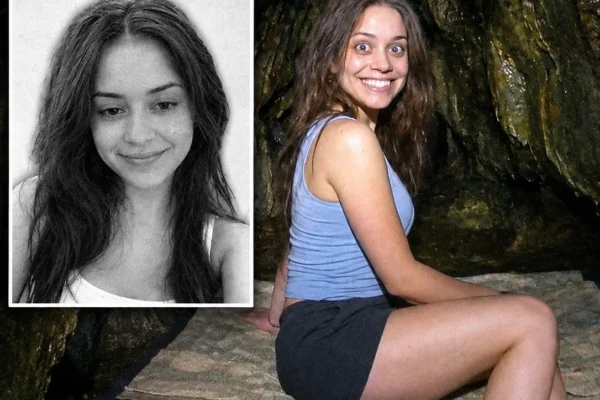
Her name was Irene Garza. To the world, she was a young teacher, a woman of quiet dignity and immense promise. To her community, she was a miracle. In a town divided by railroad tracks and deep-seated prejudice, where the color of your skin determined which side of the street you lived on and which pool you could swim in, Irene had walked through the walls. She had been the first Latina twirler at McAllen High School, the first in her family to attend college, a woman who carried herself with a grace that made the barriers around her look suddenly, uncomfortably small. She was twenty-five years old. She was beautiful, devout, and widely adored. She was exactly the kind of person who should have been safe.
But on the night of Holy Saturday, April 16, 1960, that safety evaporated.
Irene had borrowed the family car just before seven o’clock that evening. The Rio Grande Valley was in the thick of Holy Week, a time when the air itself felt charged with reverence. In South McAllen, the streets were quiet, the houses dimmed, the families preparing for the Mass of the Lord’s Supper. Irene told her mother, Josefina, that she was going to Sacred Heart Church to confess her sins. It was a routine trip. She had made it hundreds of times. Twelve blocks of easy driving. She promised she would be right back, home in time to help her family prepare for Easter Sunday.
She was not right back.
Inside Sacred Heart Church, the sanctuary was packed. The lines for confession stretched through the pews, a river of faithful souls seeking absolution before the holiest day of the Christian calendar. Multiple priests were on duty, moving through the crowd, their faces hidden behind the wooden screens of the confessionals, their voices low and soothing. It was a scene of order, of community, of grace.
And then there was Father John Feit.
Feit was a visitor, a twenty-seven-year-old priest from Chicago who had been assigned to the parish for pastoral training. He was young, polished, and spoken to with a fluency in Spanish that made him popular among the parishioners. He was also, by the accounts of those who knew him, a man who kept his own secrets behind a careful, charming mask. He was bright. He was well-mannered. And he was, as the weeks that followed would reveal, entirely unpredictable.
As Irene moved through the crowd, she was seen by several parishioners. One watched her make the sign of the cross as she entered the sanctuary, her white lace veil draped neatly over her head. Another saw her kneeling alone in the fifth-row pew, her posture perfect, her face serene. A third remembered Irene approaching the front of the line, polite and apologetic, asking if she might move up because she was running late. She just wanted to get home to her parents.
Feit was hearing confessions that night. But he did not hear Irene’s in the public sanctuary. He did not stand behind the screen where the eyes of the congregation might have seen her. Instead, he did something that broke the protocol of the Church, a move so irregular that it would later become the single most damning piece of circumstantial evidence in the case. He took her out of the line. He took her into the rectory.
The rectory was a private building attached to the church, a place for the priests to live, to pray, to work. It was not a place for a parishioner, especially not a young woman on the busiest night of the Easter season. It was a place of privacy. And in that privacy, with the door shut and the world outside forgotten, Irene’s story shattered.
Nobody saw Irene leave the church. Not a single person. Her car sat parked down the street, untouched, the engine still ticking in the warm Texas night. Hours passed. Midnight came, then one o’ clock, then two. The Garza house was silent, the lights on, Josefina and her husband Nicolas waiting for their daughter to walk through the door. They assumed she had stayed for the Easter vigil service, which ran late. But the house remained empty. The car was gone. Their daughter was not home.
By three o’ clock in the morning, on the most sacred day of the year, Nicolas Garza was standing in the McAllen Police Department, his face gray and set, explaining to an officer that his twenty-five-year-old daughter had gone to church and never come back.
Easter Sunday passed with no sign of Irene. Then Monday. The panic in the Garza family deepened with every hour, every silent phone ring, every missed meal. The community began to stir, the whispers growing louder as the days ticked by. Irene was their teacher, their friend, their beacon. Where was she?
Then, on April 18, two days after she vanished, the evidence began to surface. It started on McCall Road, a stretch of outskirt road where the fields met the sky. A passerby named P. W. Miller spotted something near the curb. It was a single beige high-heeled shoe, a Fiancées brand pump, lying in the dirt. Just a left shoe. A short distance away, a fellow teacher from Irene’s school found her black patent leather purse in a field. Her driver’s license was still inside, fluttering in the wind. Further along the road, tangled in the brush, was her white lace veil.
The trail of belongings told a story that no one in the family wanted to hear. It was a story of violence. It was a story of a struggle. And it was a story that implied someone had driven this road with Irene, or with what belonged to Irene, sometime after she disappeared from the church.
What followed was the largest search operation in the history of the Rio Grande Valley. It was a mobilization of a community that loved Irene. Seventy members of the Hidalgo County Sheriff’s posse, riding on horseback, fanned out across the brush country, their boots kicking up dust in the afternoon sun. Skin divers dragged the irrigation canals, their hands feeling blindly through the mud and water for any sign of life or death. Two Border Patrol planes flew grid patterns overhead, their spotlights cutting through the darkness, scanning the earth for a glint, a shadow, a body. Sixty-five National Guardsmen joined the ground search, walking shoulder-to-shoulder through the fields and ditches, their exhaustion mirroring the grief of the families watching from the sidelines.
Volunteers organized their own parties, dragging nets through the canals, combing the brush, checking every ditch and culvert. They were her neighbors. They were the parents of the children she had clothed and fed. They were the friends who had watched her break the barriers of their town. And they were all, collectively, desperate.
False leads tormented the family, each one a brief flare of hope followed by a crushing return to despair. A woman called the police claiming to be Irene, saying she had been kidnapped in the nearby town of Hidalgo. It was a hoax. A drunk man in Edinburg walked into a police station and confessed to the murder. Detectives questioned him for hours, only to find that his story was a fabrication, a desperate fantasy. Every false alarm broke the family’s hearts all over again.
Then came Thursday, April 21. Five days after Irene had walked into Sacred Heart Church. At 7:40 in the morning, a phone call came into the police department. A body had been spotted in the Second Street Canal, a concrete irrigation channel near Business 83, across from the local Sears department store.
It was Irene.
The divers pulled her body from the water. She was still wearing most of her clothing, though her shoes and undergarments were missing. Her lavender blouse was unbuttoned. Her petticoat had ballooned over her head in the water, a ghostly white bloom. The right side of her face was severely bruised and swollen, the skin dark and bruised. She had two black eyes.
The official cause of death recorded on the death certificate was trauma to the right side of her head causing brain hemorrhage, combined with suffocation. The degree of decomposition told investigators something chilling. She had been dead for slightly fewer than four days. That meant that after she disappeared from the church on Saturday night, Irene had been held alive for up to a day before she was killed. The gap between her disappearance and her death suggested captivity. It suggested a struggle. It suggested a man who wanted her to stay, even as he broke her.
Any biological evidence had been washed away by the canal water, but the scene on the bank spoke clearly. A muddy man’s shoe print was pressed into the earth near the water’s edge. A strand of Irene’s hair was tangled in the mud of that footprint. Tire tracks ran along the bank. There was a visible imprint in the soil where a body had been set down and dragged to the water. And as the canal was drained weeks later, investigators found one more piece of evidence sitting in the silt, just feet from where Irene’s body had been floating.
It was a light green Eastman Kodak slide viewer, with a long black cord attached to it. It was a small personal device, the kind of thing someone might carry in a pocket to view photographic slides. It did not belong to Irene. It did not belong to any of the volunteers who had searched the canal. It belonged to Father John Feit.
He admitted as much. He said he had bought it the previous summer at a drugstore in Port Isabel. But what he never explained—not to the police, not to the investigators, not to anyone—was how his personal property ended up at the bottom of a canal, in the silt, feet from a dead woman’s body.
John Bernard Feit was born in Chicago in 1932, the youngest of three children in a German Catholic family. His uncle was a priest. His brother had become one. At thirteen, his parents had sent him to an all-boys seminary in San Antonio, run by the Missionary Oblates of Mary Immaculate. He had been ordained on September 8, 1958, and sent to the Rio Grande Valley almost immediately. He was bright, articulate, fluent in Spanish. He was described by some parishioners as charming. By others, he was described as cold. He maintained a careful distance from the people around him, a polished surface that hid whatever lay beneath.
In the days after Irene’s body was found, Feit’s account of that night began to shift in ways that investigators noticed immediately. He initially told police that Irene came to the rectory with a question of conscience, and that he simply directed her back to the sanctuary. It was his first story. But later, under more pointed questioning, he changed it. He admitted that he had actually heard her confession privately in the rectory.
That shift was significant. It meant that, by his own admission, Feit was the last known person to see Irene alive. He had been alone with her in a private room, away from witnesses, away from the eyes of the congregation, away from the world.
Father Joseph O’Brian, the warm and well-liked assistant pastor at Sacred Heart, had been paying close attention. After midnight Mass that Holy Saturday, O’Brian had noticed something on Feit’s hands. They were scratched. Fresh scratches. The kind you might get from a struggle, or from gripping something rough in a hurry.
Feit had an explanation ready. He said he had broken his glasses during the evening. He had driven five miles to the pastoral house in San Juan, found himself locked out, and had to climb up to a second-floor balcony to get inside, scraping his hands on the brick exterior of the building.
Five miles, in the middle of hearing confessions on the busiest night of the church year, to retrieve glasses from a building he somehow couldn’t enter through the front door? It was a story that strained the limits of belief. And it was a story that investigators would use to chip away at Feit’s composure.
But the scratches on his hands were only one piece of the puzzle. The slide viewer was another. And the third piece was a crime that had happened just weeks before Irene’s murder, a crime that revealed a pattern that investigators could not ignore.
On March 23, 1960, a twenty-year-old college student named Maria America Guerra was kneeling at the communion rail inside Sacred Heart Church in Edinburg, about twelve miles north of McAllen. She was alone in the church, praying her rosary. A man approached from behind. He grabbed her. He tried to force a cloth over her mouth.
Guerra fought hard. She bit the man’s finger until it bled freely. The attacker released her, and she ran. When she reported the assault, Guerra told police she believed her attacker was a priest. Investigators quickly connected the incident to Feit. He admitted he had been at Sacred Heart in Edinburg earlier that afternoon. He was driving a blue and white 1956 Ford sedan, which matched the description multiple witnesses gave of a vehicle seen near the church around the time of the attack.
His right hand was injured. He told colleagues at Sacred Heart in McAllen that he had hurt his finger on a mimeograph machine. But a church secretary who examined the wound said those were clearly bite marks, not machine injuries. The pattern of the wound matched teeth, not gears.
Maria America Guerra was brought in for a lineup. She identified John Feit as her attacker. An eyewitness to the assault did the same. The parallels were impossible to ignore. A young woman attacked inside a church while praying. Another young woman murdered after going to confession in a church. Both crimes committed against women who were alone, vulnerable, and engaged in religious devotion. Both connected to the same twenty-seven-year-old visiting priest.
The McAllen police brought in the elite Chicago polygraph firm John E. Reid and Associates to test Feit. The examination stretched over two full days in June 1960. The examiners were thorough. Their final report concluded that the test results definitely implicated him in both crimes. The examiner was convinced that the subject was not telling the truth when he denied killing Irene Garza or attacking Maria Guerra.
During the examination, Feit reportedly made a statement that would echo through the decades to come. He told the examiners, with what investigators described as unsettling calm, that there would never be any evidence turning up. That without a confession, they didn’t have enough to convict him.
He was daring them. And for a long time, he was right.
Initially, McAllen police told the press that Feit had passed the polygraph. This was not true. The results were later quietly revised to inconclusive. The original examiner would eventually say, years afterward, that he had always believed Feit failed.
Think about that for a second. The scratches on his hands. The slide viewer in the canal. The attack on Maria America Guerra just weeks earlier. The victim identifying him in a lineup. The polygraph report saying he was lying. The fact that he was the last person alive to see Irene in a private room with no witnesses. Every single thread of evidence pointed to one man.
And the system looked the other way.
If you are wondering how that is even possible, so is everyone else. And the answer has nothing to do with a lack of evidence. It has everything to do with what happened behind closed doors, between the Catholic Church and the prosecutors. The stage was set for a cover-up that would last for decades. The machine of the Church, that ancient and powerful institution, was already moving. And it was not moving to protect Irene. It was moving to protect itself.
The machine of the Church, that ancient and powerful institution, was already moving. And it was not moving to protect Irene. It was moving to protect itself.
In the weeks that followed the discovery of Irene’s body, the tension in McAllen was a physical thing, thick and suffocating. The police investigation was meticulous, methodical, and, by all outward appearances, exhaustive. Detective after detective worked the case. The polygraph firm from Chicago, John E. Reid and Associates, had been flown in to administer tests to the prime suspect. The results, when they finally came in, were damning. The examiners concluded that John Feit had definitely failed the test regarding the murder. He was lying. He had been in that room with Irene. He had caused her death.
If this had been a different era, or a different country, or even a different diocese, Feit would have been arrested before the ink was dry on that report. But this was 1960 Texas, and the Rio Grande Valley was not just a collection of towns; it was a fiefdom of the Catholic Church. The institution was not merely a religious body; it was the social, political, and moral backbone of the community. To challenge the Church was to challenge the hierarchy that governed every aspect of life, from business to marriage to politics. And when the most powerful man in the valley, the visiting priest from Chicago, fell under suspicion, the reaction was not one of justice, but of containment.
The containment began with silence. It began with the way the local news avoided the subject. It began with the way parishioners who had seen Feit lingering near the rectory that night stopped talking to one another, their eyes darting around, as if speaking the name *Feit* aloud might summon a curse. It began with the pulpit.
At Our Lady of Sorrows Church, a service was held in the days following Irene’s funeral. The air in the sanctuary was heavy with grief, but it was a muted grief, a grief that had been carefully edited. A priest stood at the altar, looking out over a congregation that included the parents of Irene’s students, the neighbors who had brought flowers, and the family of the victim themselves. He did not offer comfort in the traditional sense. He offered a command.
"It is impossible that a priest would commit a crime like this," he said, his voice echoing off the stained glass. "Don't speak of it. Don't even let yourselves think it."

For a community where the word of the priest was often indistinguishable from the word of God, that statement was a weapon. It was a noose. It effectively silenced the victims. Noemi Sigler, Irene’s cousin, remembered the atmosphere in the weeks that followed. People who had suspicions stopped voicing them. People who had seen something odd at the church that Holy Saturday stopped talking. The community’s instinct to demand answers, to look at the evidence, to trust the police, was smothered by a religious authority that declared seeking those answers was itself a sin.
While the congregation was being told to forget, the machinery behind the scenes was working in high gear. The evidence was not being destroyed; it was being managed. The police files were still there, the polygraph results were still there, the slide viewer was still in an evidence locker. But the political will to use that evidence was being drained away, drop by drop, into a vacuum created by the Church.
The first crack in the wall of silence appeared not in McAllen, but in the legal strategy surrounding the Maria America Guerra case.
Guerra, the twenty-year-old college student who had been attacked inside a church in Edinburg just three weeks before Irene’s death, had been a victim for nearly a month before her story was fully untangled. She had identified Feit in a lineup. An eyewitness had identified him. The bite marks on his hand—originally attributed to a mimeograph machine—were clearly teeth. The pattern was undeniable. Feit was a predator who struck during moments of religious vulnerability. He attacked women who were alone, praying, trusting the safety of the sanctuary.
The Guerra case went to trial in Austin in 1961, long before the murder charge against Feit could be properly pursued in Hidalgo County. The jury deadlocked, nine to three in favor of conviction. It was a hung jury. The odds of a retrial going the same way were low. Feit’s legal team, working in tandem with church officials, saw an opportunity. They negotiated a plea deal. In 1962, Feit pleaded no contest to a reduced charge of aggravated assault, a misdemeanor. His punishment was a $500 fine. No jail time. Not a single day behind bars.
To many observers, it looked like a standard settlement for a low-level assault. But it was not. It was the first piece of a much larger, calculated transaction.
The true nature of the arrangement was revealed decades later, in 2017, when the case was finally reopened. Attorney and former television reporter Daryl Davis took the stand. He testified that he had witnessed a conversation in the 1960s that changed everything. He recalled that the district attorney at the time, Robert Latimore, had gathered a small group of media members for an off-the-record briefing. In that meeting, Latimore told the reporters, with a bluntness that should have sent chills down their spines, that both the prosecutors and the Catholic Church officials knew John Feit murdered Irene Garza.
The plea deal on the Guerra case was the other half of that agreement. Feit would plead to the lesser charge. In exchange, the Hidalgo County District Attorney’s Office would not pursue murder charges in the Garza case. The Church would take care of the rest. They would transfer Feit, bury him in monasteries, and quietly discipline him outside the reach of public scrutiny. The Garza family would never be told. The community would eventually move on. The scandal would suffocate in silence.
The physical proof that this conspiracy was real had been sitting in Oblate Church records for more than fifty years, waiting to be found. It was a letter dated August 1st, 1960, written by Father J.F. Pawlicki to Father Lawrence Seidel, who headed the Oblates Southern Province. When that letter was subpoenaed for the 2017 trial and read aloud in a Hidalgo County courtroom, the impact was seismic.
The letter relayed advice from Sheriff E.E. Vickers of Hidalgo County, who was himself a Catholic. Vickers recommended that the Church transfer Feit to another part of the country as a "normal obedience" to get him out of the area of suspicion. The letter stated plainly that "the longer time we have, the weaker the case gets." It warned that the Garza case could give the opponents of the Church a field day. And here, the political calculus revealed itself. The letter explicitly stated that the scandal could become a "juicy" one for the opposition to John F. Kennedy during the 1960 presidential campaign.
In 1960, Kennedy was fighting a battle against anti-Catholic prejudice on the national stage. He was the first Catholic major party nominee. His campaign was terrified of any scandal that might paint the Church as a corrupt or predatory institution. To the Church hierarchy, a murdered young woman in a Texas irrigation canal was less of a human tragedy and more of a political liability. It was a stain on the brand.
The letter also expressed concern about the Masons exploiting the controversy against the Church. It had been written after consultation with Bishop Reicher. It discussed strategy, optics, political calculations, and institutional survival. And in all of those carefully worded paragraphs, in the document that decided the fate of a killer, Irene Garza was never mentioned by name. Not once.
It never mentioned her parents, Nicolas and Josefina. It never mentioned the twenty-five-year-old school teacher who had walked into their church to confess her sins and never walked out alive. The woman at the center of this catastrophe was erased from the document that decided her killer’s fate. In the eyes of the institution, she was not a person; she was a problem to be solved, a scandal to be managed, a potential threat to a political alliance with the Democratic Party.
The silence was not just administrative; it was spiritual warfare. The Church had decided that its reputation was worth more than Irene’s life. And they made sure everyone knew it.
In the months that followed the plea deal, the Church moved John Feit through a carefully planned sequence of transfers. Each one put more distance between him and Texas, between him and the evidence, and between him and the memory of what he had done. First came the Trappist monastery at New Melleray Abbey in Dubuque, Iowa. Then, Assumption Abbey in Ava, Missouri. Then, in 1966, the Servants of the Paraclete Treatment Center at Jemez Springs, New Mexico, a facility designed specifically for priests with behavioral problems.
The public narrative was that Feit was being treated for spiritual distress. That he was penitent. That he was undergoing therapy. In reality, he was being hidden. At Jemez Springs, Feit didn’t just receive treatment. He rose to a supervisory position. He began evaluating which troubled priests were fit to return to active ministry. A man who had murdered a woman inside a church was now deciding the futures of other problematic priests. He was safe. He was protected. And while he was quietly building his second life inside church facilities, the truth was finding its way to the surface, slowly, reluctantly, and through channels nobody expected.
But for Irene’s family, the distance was agonizing. They were not in Iowa or Missouri. They were not in New Mexico. They were in McAllen, in the same house, in the same town, in the same community that had been told to stop thinking about it. They watched their daughter’s killer disappear into a fog of clerical secrecy. They watched the years pass. They watched Nicolas Garza grow old, the lines on his face deepening, his faith in God cracking under the weight of unanswered questions.
The silence enforced from the pulpit had a specific cost. It isolated the grieving family. In a small town, everyone knows everyone. But when the most powerful institution in town tells you that your pain is a sin, you stop sharing it. You stop going to mass. You stop attending the weddings of your neighbors. You become a ghost in your own life.
Noemi Sigler’s father, Milo Ponce, had been one of the original investigating deputies on the Garza case. He had seen the files. He had seen the polygraph results. He had known the truth from day one. And he had been forced to watch it die. Sigler remembered him sitting at the family kitchen table one evening, weeping. He had been ordered to hand over his investigative files and step aside so that higher-ranking officials could take control. He knew the case was being buried. He knew the man who killed Irene was going to walk free, and there was nothing he could do about it. The power of the Church was not just spiritual; it was bureaucratic, legal, and social. It was a wall that no individual, no matter how brave, could break alone.
Feit was not just moving away from Texas; he was moving away from himself. In the monasteries, he was given a new identity. He was a penitent. He was a student. He was a caretaker. He was no longer the priest who left a slide viewer in a canal. He was no longer the man with bite marks on his hand. He was just another name in a registry of troubled clergy, managed by the same Oblates who had written that August 1960 letter.
And while Feit was building his quiet, law-abiding second life, the Garza family was building their own quiet, law-breaking grief. They were not allowed to speak. They were not allowed to question. They were told that a priest could not do such a thing. They were told that the system was working. They were told to wait.
They waited for years. They waited for decades. They waited for the promise of justice to arrive, only to have it recede further into the distance every time a new election came, every time a new bishop took office, every time the wind blew through the empty canals of McAllen.
The cover-up was not just a failure of police work. It was a triumph of institutional self-preservation. It was a deliberate, calculated choice to sacrifice a human life to save an institution’s reputation. And as the decades passed, that choice would become the central truth of Irene Garza’s story. Not that she was killed, but that she was killed twice. Once by the man in the rectory. And once by the system that buried her.
But the system, no matter how strong, has a weakness. It relies on silence. And silence, eventually, always cracks.
For now, though, the crack was invisible. Feit was in Missouri, in a monastery, a shadow of a man. The Garza family was in McAllen, holding their breath. The year was 1963. And in a small room at a monastery in Ava, a young monk was sitting across from John Feit, listening to a confession that would change the rest of his life, and the rest of the century.
The year was 1963, and the silence in Ava, Missouri, was thick enough to cut with a knife. The air inside the walls of Assumption Abbey, a Trappist monastery nestled in the Ozarks, smelled of damp stone, incense, and the sharp scent of pine. It was a place designed for withdrawal, for penance, and for the quiet cultivation of the soul. For most of the monks who lived there, it was a sanctuary from the noisy, chaotic world of the mid-century America that was rushing forward toward the Civil Rights Act and the Space Age. But for one specific prisoner of his own crimes, it was a fortress.
John Feit had arrived at the monastery not as a penitent seeking redemption, but as a fugitive seeking a hiding place. He was no longer the bright, fluent, somewhat aloof young priest who had walked into the Rio Grande Valley in 1959. In the months since Irene Garza’s body had been pulled from the canal, Feit had moved through a carefully orchestrated sequence of transfers, each one putting more miles, more jurisdictions, and more layers of institutional bureaucracy between him and the Texas sun. He had spent time at New Melleray Abbey in Iowa, then landed here in Missouri, and later, he would move on to a treatment center in New Mexico. But in that small, windowless counseling room in Ava, the truth began to bleed through.
Sitting across from him was Dale Tachney. Tachney was young, barely older than Irene had been when she died, a monk in his early years who had entered the order with a fervor that bordered on idealism. He was earnest, compassionate, and devoted to his calling. He had been assigned to counsel Feit during a series of therapeutic sessions, a role that in the church’s internal language was meant to be a form of spiritual care, a gentle rehabilitation for a priest who was supposedly suffering from a "behavioral crisis." But the sessions at Assumption Abbey were not about healing. They were about management. They were about keeping the asset contained, keeping the story contained, and keeping the name clean.
Tachney didn’t know what he was hearing when he first sat down with Feit. He saw a troubled man, a priest who was losing his way, who was struggling with the weight of his vows and the isolation of the monastery. Feit was polite, but distant. He spoke in careful, clipped sentences, maintaining that polished distance that had characterized his time in McAllen. Tachney offered the standard script of pastoral care: listen, judge not, guide back to the path. He thought he was helping a broken man.
But then, the walls started to fall down.
It began in fragments. Feit spoke of a night in the spring, a night that was "quiet but full of tension." He spoke of a woman who was alone, who was vulnerable, who had placed her trust in the sanctity of the church. Tachney, following the protocol of his role, listened intently, his face a mask of concern. He took notes. He asked gentle questions. He waited for Feit to reveal the specific sins that weighed on his heart, so that he might offer the absolution that the monastery’s superiors had promised him.
Then, in the middle of a session that Tachney would later describe as the most terrifying experience of his life, Feit stopped speaking. He looked at Tachney, and for the first time, the mask slipped. The polished, aloof priest was gone. In his place was something darker, something raw and terrified, not of God, but of exposure.
Feit told him about the basement of the rectory.
He described the scene with a clinical detachment that was more chilling than any scream. He said that after hearing the young woman’s confession, he had realized that she was not the one he had expected. Or perhaps, he realized that the opportunity was too good to pass up. He described how he had moved her to the basement, how he had bound her and gagged her. He described the sound of her struggling, the frantic movement of her body against the restraints. And then, the detail that would haunt Tachney for the rest of his life.
Feit said that as he left the rectory, walking back to his cell, he could hear her. She was calling out. He described hearing her voice, thin and desperate, echoing off the stone walls of the building she had trusted. She was saying, "I can't breathe. I can't breathe."
Tachney stared at him. The air in the small room seemed to have vanished. He thought about Irene Garza. He knew her. Everyone in the Oblate network knew her name, even if it wasn't said out loud in the official channels. He knew she was a teacher, a beauty queen, a woman who loved God more than anyone he had ever met. And here was the man who had taken her, sitting across from him, calmly describing the last moments of her life.
When Feit finished speaking, he looked at Tachney with a strange expression. It wasn't shame. It was resignation. It was the look of a man who had already accepted his fate, or perhaps, a man who was simply testing the boundaries of his protector. Feit leaned forward and said, in a voice that was almost a whisper, "The church helped me. Law enforcement helped me. The seal of confession helped me."
It was a chilling admission. Feit wasn't just confessing a crime; he was explaining how he had survived it. He was telling Tachney that the system they both belonged to, the sacred institution that claimed to be the light of the world, had been the very instrument of his escape. And Tachney, trapped in that monastery, realizing the full scope of the lie he was living inside, had no choice but to sit still.
He did not call the police. He did not go to the bishop. He did not write a letter to the *McAllen Daily Herald*. He was a monk. He had taken vows of poverty, obedience, and silence. To challenge the church in this way was to challenge the foundation of his entire existence. To speak out was to be exiled, branded a heretic, and cast out into a world that would never let him forget that he had failed to uphold the order's duty. So, he kept his mouth shut. He kept his notes. He kept his terror.
He carried that burden for decades. He thought about Nicolas and Josefina Garza, sitting in their kitchen in McAllen, waiting for a daughter who would never walk through the door. He thought about the 500 people police had questioned, the 61 polygraph tests administered, the 70 men on horseback searching the brush. He thought about the way the community had been told, from the pulpit of *Our Lady of Sorrows*, that it was impossible for a priest to commit such a crime. And he knew that he was holding the one piece of the puzzle that could shatter that lie: the confession of the killer, given to a man inside the very walls that were protecting him.
But Tachney was not the only one who heard the truth.
In McAllen, in the shadow of the Sacred Heart Church where it all began, another man was carrying the weight. Father Joseph O'Brien. He was the assistant pastor, the warm and well-liked priest who had noticed the fresh, jagged scratches on Feit’s hands that Holy Saturday night. He was the one who had watched Feit’s line stall, who had seen the confusion on the faces of the parishioners waiting for confession. He was the one who had asked questions that no one else in the parish felt safe asking.
O'Brien liked Irene. The entire parish did. She was the teacher who bought clothes for the barefoot kids. She was the woman who attended mass every day. She was the daughter of the dry-cleaning family who had broken the color line of the town. And so, when the evidence started to point toward Feit—shifting stories, the slide viewer in the canal, the prior attack on Maria America Guerra—O'Brien didn't back away. He pressed.
He confronted Feit repeatedly over the weeks and months that followed the plea deal. He went to the Oblates headquarters in San Antonio, the nerve center of the order’s operations in the South. There, in a sterile office away from the sun-baked streets of McAllen, Feit finally broke down. Or perhaps, he simply decided that the performance was no longer necessary.
Feit admitted the murder to O'Brien directly.
It was a raw, unfiltered admission. Not the clinical detachment he had shown Tachney in Missouri, but a confession born of fatigue. Feit had spent too long hiding, too long maintaining the facade of the respectable, law-abiding priest. He had been moved, transferred, and disciplined, but he had never been punished. And so, in the end, he just told the truth to the man who had seen the scratches on his hands.
O'Brien was devastated. He felt the shock of it, the horror of the betrayal. But like Tachney, he was trapped. He was a priest. He was part of the Oblates. To go to the police with a confession from a priest was not just a career-ending move; it was a spiritual crisis. And more practically, he feared the consequences. If he went to the authorities and Feit denied it, O'Brien would have no proof. He would have a story that could be dismissed as the delusion of a disgraced priest. He could be sued for slander. He could be excommunicated. The church had taught him that the seal of confession was inviolable, and even though this was not technically a sacramental confession in a confessional, the pressure to protect the institution was immense.
So, O'Brien did something that would haunt him for the rest of his life. He went to the Garza family.
He sat with Nicolas and Josefina in their home, the same home where they had waited for Irene on that Easter Sunday morning. He looked them in the eye, two parents who had lost their daughter and were being told by the system to wait for justice that would never come, and he told them a lie. He told them that the church was handling the situation internally. He told them that the internal discipline of Feit would be greater than any sentence handed down by the courts. He told them that they should have faith.
He knew it was a lie. He knew that the church wasn't disciplining Feit; they were relocating him. They were giving him a new start in a new place where no one knew what he had done. There was no internal punishment that matched the taking of a human life. There was only institutional self-preservation, dressed up in the language of spiritual authority.
But the Garzas, broken and exhausted, believed him. Or at least, they chose to believe him because it was the only story that made sense in a world where the other story meant that their daughter had been killed by a man in a white collar, and that man had been protected by the very institution that she loved. They went back to their dry-cleaning shop. They went to mass. They stopped asking the police for updates. They started to fade.
And so, two separate confessions. Two men who knew that John Feit murdered Irene Garza. And decades of silence.
Tachney sat in his cell in Missouri, O'Brien walked the halls in Texas. They did not speak to each other. They did not know that the other had heard the same story. They were isolated, trapped in the different wings of the same machine. And while they suffered in silence, watching the Garza family wait for answers that would never come, John Feit was building a second life.
By the early 1970s, the monasteries had served their purpose. The immediate scandal had died down. The 1960 election was over. The Kennedy presidency was a memory. The "juicy scandal" mentioned in the 1960 letter had never materialized, and the church’s reputation had weathered the storm. Feit had done his time in the Oblate system. He had been "counseled." He had been "disciplined." And now, he was ready to step back into the world.
He left the priesthood entirely. It was a scandal of a different kind, but one that was far easier to manage quietly than a murder. He married a woman who did not ask too many questions about his past. He moved to the Phoenix area, eventually settling in Scottsdale, Arizona, a sun-drenched suburban paradise where the desert wind could blow the dust off a crime. He had three children. He got a job in food service management, a blue-collar, respectable profession that required no connections to the church, no public speaking, no standing in front of a congregation.
For 17 years, he volunteered at the Society of St. Vincent de Paul, a Catholic charity. He was a quiet, aging retiree. He went to the grocery store. He mowed his lawn. He hugged his grandchildren. If you met John Feit at a neighborhood barbecue or a church fundraiser in Scottsdale, you would have seen a kind, soft-spoken man. You would not have seen the predator who had described the sound of a young woman gasping for air in a basement. You would not have seen the man who had told a monk, "The church helped me." You would have seen a ghost.
And while Feit lived his quiet, law-abiding life in the Arizona sun, the Garza family was stuck in the cold.
In the Rio Grande Valley, the case became a whisper. It was the thing that people looked at when they were walking into the church, but it was never spoken. It was the shadow that followed the Garza name. Nicolas Garza continued to run his dry-cleaning business. Josefina continued to wait, not for a knock at the door, but for a knock that would bring the truth. But the knock never came. The years ticked by. The 1970s, the 1980s, the 1990s. The world changed around them. Technology advanced. The political landscape shifted. But in McAllen, the silence held.
It was a specific kind of silence, one enforced by the very power that had caused the crime. In a community where the Catholic Church’s word carried the weight of divine authority, questioning the church was considered almost sacrilegious. To speak about Feit was to bring a curse upon yourself. To speak about the Garza case was to open a wound that the community had been instructed to ignore. And so, the case faded from the headlines. It faded from the evening news. It became a local legend, a ghost story that was told in low voices in kitchens and car pools, but never in the courtrooms.
But the Garza family did not fade. They did not stop. They were the only ones in the room who were still breathing.
Noemi Ponce Sigler, Irene’s cousin, and the daughter of the deputy who had wept at his kitchen table after being forced off the case, decided that she would not let her cousin be forgotten. She was not a detective. She was not a lawyer. She was a family member with a refusal to accept the lie that had been fed to her for decades.
She started in the 1980s, when the silence was at its thickest. She began knocking on doors. She tracked down witnesses who had scattered over the decades, the ones who had been afraid to speak in 1960, the ones who were still afraid in 1980. She cataloged every piece of evidence she could find. She read the police reports that had been filed away. She found the polygraph records that had been quietly revised from "failed" to "inconclusive." She attended every public meeting where the case might come up, standing in the back row, taking notes, asking the right questions.
She filed requests with police departments and prosecutors' offices. She was told that the statute of limitations had expired, that the case was closed, that Feit was dead, that Feit was a good man now. She was told that the church had taken care of it. She was told to move on.
She did not move on. She cornered every new police chief. She cornered every new district attorney. She cornered every journalist who came through McAllen. She made them listen. She made them hear the name Irene Garza. She stood in front of them and said, "He is not dead. He is not in prison. He is in Arizona. And he knows what he did."
Linda de la Viña, another of Irene’s cousins, fought alongside her with the same quiet, relentless determination. The two women became the case's unofficial guardians. They were the keepers of the flame, in a world that had tried to extinguish it. They were not heroes in the traditional sense; they did not fight a battle and win. They fought a war of attrition, a war of memory, and they fought it in the shadows of the church that had silenced them.
And then, in 2002, something finally cracked.
It was not a dramatic explosion. It was a phone call. Dale Tachney, now decades removed from his time at the Missouri monastery, had finally reached a point where the weight of what he knew was heavier than the fear of what it might cost him. He picked up the phone and called a San Antonio detective named George Saedler.
He told Saedler that in 1963, a priest at a monastery in Missouri had confessed to attacking and killing a young woman on Easter weekend. He told him the details: the binding, the gagging, the sound of the woman saying she couldn't breathe. He told him that the priest said the church had helped him escape.
There was a complication. Tachney remembered the priest saying the crime had occurred in San Antonio, not McAllen. The San Antonio police tried to look into it. They found nothing. There was no matching case. The lead stalled. The mystery of the "San Antonio priest" faded into the archives.
But a Texas Ranger, Lieutenant Rudy Jaramillo, who had been assigned to lead a fresh look at the Garza case after McAllen Police Chief Victor Rodriguez formally asked the Unsolved Crimes Investigation Team to reopen it, did not let it go. He looked at Tachney’s account. He looked at the details of the Garza case. He saw the connection. The "San Antonio" location was a mistake, a memory that had warped over 40 years, or perhaps a lie that Feit had told Tachney to keep him confused. But the details matched. The basement. The binding. The scream of "I can't breathe."
Jaramillo tracked down Father Joseph O'Brien. The old priest was now elderly, his health declining, his body a map of the years he had spent carrying the secret. For the first time speaking on the record, O'Brien admitted what he had known for over four decades. He told the Rangers that John Feit had confessed the murder of Irene Garza to him directly, shortly after the crime.
Two confessions. Confirmed independently. 40 years after the fact.
The case should have been reopened immediately. The evidence was solid. The witnesses were willing. The motive was clear. The system should have moved. But it didn’t. Because the man who had the power to bring charges had no interest in doing so.
The long-time Hidalgo County District Attorney, Rene Guerra, had held office for roughly 32 years. He was a political institution in his own right. He had survived every election, every scandal, every shift in the wind. And he had a reason to keep the Garza case buried. Not just because it was old, but because it implicated the very institutions that had supported his career. To reopen the case was to reopen the scandal of the church. To reopen the scandal of the church was to question the allies of the political establishment.
Under public pressure, partly driven by the *Texas Monthly* article and the *CBS 48 Hours* report that had put the case back in the national spotlight, Guerra took the case to a grand jury in 2004. But he did not subpoena the key witnesses. He didn't call Dale Tachney. He didn't call Father O'Brien. He didn't call Feit. He presented a hollow case to a grand jury that had no choice but to decline to indict because the crucial testimony was never placed before them.
When the family protested, Guerra told Linda de la Viña directly that they would never get an indictment. When a reporter asked him why anyone would still be haunted by the case, his answer was stunning in its dismissal. He said, "She died. Her killer got away. You'd think someone would have said something."
It was the last nail in the coffin of the old system. And it was the signal that the old system was ready to die.
But the cracks in the foundation were showing. In 2014, a 41-year-old former district judge named Ricardo Rodriguez Jr. decided to challenge Rene Guerra for the Hidalgo County District Attorney seat. Rodriguez was the son of migrant farm workers. He had grown up in the valley, he had worked his way through law school, he had risen to the bench, and he understood the community in a way that Guerra, after three decades of entrenched political comfort, no longer seemed to.
Rodriguez made the Garza case a centerpiece of his campaign. He told voters plainly and publicly that if they elected him, he would pursue justice for Irene Garza. Not as a political stunt. Not as a campaign slogan to be forgotten after election day. As a binding promise.
Irene's family believed him. Noemi Sigler and Linda de la Viña threw themselves into Rodriguez's campaign. They knocked on doors. They told their story to anyone who would listen. They looked voters in the eye and said, "This man will do what no one else has been willing to do for 54 years."
Rodriguez won decisively, capturing 64% of the vote. It wasn't close. After decades of being told to be quiet, told to accept the outcome, told that pigs would fly before Irene got justice, the people of Hidalgo County voted in overwhelming numbers for the man who promised to try.
He took office in January 2015. By April 2015, he had formally reopened the Garza case. His office assembled a prosecution team, located and contacted witnesses, and began building a case from evidence that was now more than half a century old.
In February 2016, a Hidalgo County Grand Jury, this time presented with the actual evidence and the actual witnesses, returned an indictment. John Bernard Feit was charged with the murder of Irene Garza.
Feit was 83 years old. He was living in quiet retirement in Scottsdale, Arizona. On February 9th, 2016, law enforcement officers arrived at his door. His response when they told him why they had come was measured, controlled, and almost rehearsed. "I've been questioned extensively about this dating back to 1960," he said. "So, I'm disappointed, but not surprised."
Disappointed, not surprised. Not alarmed, not confused, not outraged. The reaction of a man who had spent 56 years expecting a knock at the door and had simply decided to see how long he could outrun it.
He was extradited to Texas. He entered a plea of not guilty. Bond was set at $1 million by Judge Louise Singletary. Feit would ultimately spend 648 days in the Hidalgo County Jail awaiting trial.
The ghosts of the monastery had finally found their way out of the walls. But the story was not over. The truth had been revealed, but it had not yet been judged. The two men who had listened to the confessions—the young monk in Missouri and the assistant pastor in Texas—had broken their silence. But they had not yet stood in a courtroom. They had not yet looked a jury in the eye and told them what they had known for decades.
The trial was set for November 2017. It was going to be a reckoning for the system, a reckoning for the church, and a reckoning for the family. And for John Feit, it was going to be the end of the long, quiet road he had traveled from a monastery in the Ozarks to a prison cell in Texas.
But first, he had to face the witness stand. And on that stand, sitting in a suit that cost more than his father had earned in a month, was a man who had waited 40 years to say two words.
"She had parents."
The courtroom in Edinburg was silent. The air was still heavy with the scent of the past, but the weight of the future was pressing down on everyone in the room. The ghosts were no longer just in the monastery. They were in the building. And they were about to speak.
The silence in the Edinburg courtroom was not empty; it was heavy, dense with the weight of half a century.
On the stand, Dale Tachney, now a frail man in his eighties, adjusted his glasses. He was no longer the earnest young monk from the Missouri monastery. He was a survivor, carrying a secret that had eroded his soul for forty years. The prosecution led him gently back to 1963. They asked him to describe the moment Father John Feit had finally broken.
Tachney’s voice was thin, trembling slightly against the microphone. He described the sterile room in the monastery, the tension in the air, and then the words that followed. He recalled how Feit had admitted to the attack, the binding, the gagging, and the final, horrifying detail about the sounds he heard before leaving the basement of the rectory.
Then came the question the entire room had been waiting for. The prosecutor leaned forward, his voice soft. “Mr. Tachney, you lived with that knowledge for four decades. Why did it take so long to speak? Why wait until 2002 to make that phone call?”
Tachney closed his eyes. He looked past the prosecutor, past the judges, past the defense attorney taking frantic notes. He looked at the gallery, where the Garza family sat in a tight, unbroken circle. He thought of Nicolas and Josefina Garza, men and women who had died long before, sitting at their kitchen tables, waiting for a daughter who was already in a canal. He thought of the years he had spent in silence, protecting the institution that had protected the killer, until the guilt became a stone too heavy to carry.
He opened his eyes.
“She had parents,” he said.
It was just two words. But in the stillness of the courtroom, they landed with the force of a hammer blow.
Noemi Sigler, Irene’s cousin, didn’t try to hide it. She buried her face in her hands. Next to her, Linda de la Viña gripped her prayer book so tightly her knuckles turned white. The jurors, a mix of men and women who had spent the week hearing dry legal arguments and dusty evidence, wiped their eyes. The air in the room seemed to shift, charged with a sudden, shared grief that transcended the legal proceeding. It was no longer just a case. It was a life, remembered and mourned.
The defense, led by O. Rene Flores, tried to chip away at the emotional power of the moment. He stood with the practiced calm of a lawyer who had built his career on dismantling narratives. “Ladies and gentlemen,” he began, pacing slowly in front of the jury box, “my client has lived a quiet, law-abiding life for more than fifty years. He has no prior violent record. He is now an elderly man. The evidence presented today is circumstantial. There is no murder weapon. There is no DNA. There is no eyewitness who saw the act itself.”
Flores argued that Tachney’s testimony was protected by priest-penitent privilege, that the confession had been made in a therapeutic context, and that the police records from 1960 were riddled with gaps. He pointed to the slide viewer, that small green plastic object, and mocked it as a trinket, a coincidence, a loose thread in a fifty-year-old story.
But the jury was not buying it. They had spent seven days listening to the other witnesses. They had heard Anna Maria Cavazos Hollingsworth describe Irene’s unease, the girl’s quiet fear of the new priest who seemed to hover, who made her feel watched. They had heard Cleotilde Tilly Sanchez, the church’s former secretary, stand up and speak of the chilling comment Feit had once made to her, a threat so casual it had haunted her for decades: *“How about we close the door and make Tilly disappear?”* They had heard the phone calls, the threats, the cold, calculated silence of a man who viewed women as obstacles to be removed.
And then, the document.
When the bailiff brought the yellowing manila folder to the witness stand, the courtroom held its breath. It was August 1st, 1960. It was the letter written by Father J.F. Pawlicki to the head of the Oblate Province. It was not a piece of evidence; it was a confession of conspiracy.
The reader, a prosecutor with a steady, low voice, began.
“*The longer time we have, the weaker the case gets.*”
The phrase hung in the air. It was clinical. It was cold. It revealed a mind that viewed a dead twenty-five-year-old girl not as a human being, but as a liability, a variable in an equation of public relations.
The reader continued. “*It could become a juicy scandal for the opposition to Kennedy… It could give the opponents of the church a field day.*”
The jury shifted in their seats. They looked at one another. This was not the rambling delusion of a grieving family. This was not paranoia. This was a strategy. It was a memo from the top, a command to bury the truth to save the brand. To save the politics. To save the church.
The letter never mentioned Irene Garza. Not by her first name. Not by her last. To the men who signed it, she was not a daughter, not a student, not a friend. She was “the case.” She was the scandal that had to be managed.
Clergy abuse expert Thomas Doyle, who had spent his career studying the machinery of institutional cover-ups, took the stand next. He was a small, precise man with a no-nonsense demeanor. He spoke to the jury not with emotion, but with the certainty of a historian.
“In my thirty years of investigating this system,” Doyle said, his voice quiet but cutting, “I have seen many things. I have seen lies, I have seen negligence, I have seen malice. But this… this is the first time I have ever seen an organized plan of obfuscation and collusion, played out step-by-step, in coordination with civilian law enforcement.”
He looked directly at Feit, who sat in the defendant’s chair, a small, frail figure in a dark suit. Feit was chewing gum. He had been chewing gum since the first day of the trial. He took notes on a legal pad, his handwriting tiny and hurried. He looked bored. He looked, to the jury, like a man who was tired of the inconvenience of being there.
The defense rested. The jury began deliberations on December 7th, 2017.
For six hours, they argued. They debated the gaps in the police reports. They debated the age of the witnesses. They debated whether a confession made in 1963 was enough to hang a man in 2017. They debated whether the letter was hearsay or a smoking gun.
Feit sat in the gallery for much of the deliberation time. He kept his head down. He removed his hearing aids, a small, deliberate act that seemed to say he didn't care what they decided. He had outlived everyone who had opposed him. He had outlived the district attorney who had buried the case. He had outlived the priests who had tried to silence the community. He had outlived the police who had looked away. He believed, perhaps, that he had outlived justice itself.
At 8:17 p.m., on the fourth day of deliberation, the foreman, a woman with graying hair, stood up. Her face was stone.
“I have my honor,” she said.
The courtroom inhaled.
“Guilty of murder with malice aforethought.”
The word "Guilty" did not carry the weight of the other word that followed, but it did the job. It was the end of the road.
The next day, December 8th, the jury reconvened for sentencing. It was the final act. Prosecutor Michael Garza stood to make his closing argument for the punishment. He did not ask for the maximum sentence that was legally possible in some states, or for death, which was not on the table for this specific charge. He asked for a number.
“Fifty-seven years,” Garza said. “One for each year that this man has walked free while this family bled. One for every Easter that they celebrated with an empty chair. One for every birthday they had to mourn instead of celebrate. We ask you to sentence him to 57 years.”
It was a symbolic demand, a mathematical indictment of time.
The defense, however, pleaded for probation. They argued that Feit was elderly, that he had no violent history, that prison would only hasten his death in a hospital bed, and that he had paid his social debt through decades of quiet suffering. They painted a picture of a broken old man who deserved mercy.
The jury rejected the mercy. They had seen the blank face in the gallery. They had heard the “I’m disappointed, but not surprised” when he was arrested. They had seen the gum chewing, the note-taking, the total absence of shame. They did not see a broken man. They saw a predator who had simply gotten old.
The judge, Louise Singletary, looked at Feit.
“John Bernard Feit,” she said, her voice echoing off the high ceiling. “You are hereby sentenced to life in prison.”
The sound that rose from the gallery was not a cheer. It was a release. It was the sound of a dam breaking after fifty-seven years of pressure. Noemi Sigler collapsed into Michael Garza’s arms, sobbing so hard she could barely breathe. Linda de la Viña found Victor Rodriguez, the police chief who had started this whole re-investigation back in 2002, and held him tight. People who had not spoken in decades embraced. People who had been strangers in the courtroom stood up and hugged. The air was thick with tears and the sharp, clean scent of vindication.
But for Feit, there was no hug. There was no tear. There was only the guard who approached him, hands open and ready. Feit stood up slowly. He looked around the room, his eyes drifting over the crying faces, the reporters, the judges. He looked for a mirror, perhaps, to see how he looked. Or maybe he was just looking for the exit. But there was no exit. There was only the door to the back, and the car waiting outside.
Before he was led away, Nicholas Cavazos, a family member, walked up to the front of the defendant’s table. He didn't yell. He didn't throw things. He just stood there, pointing a finger directly at Feit’s face.
“I remember my grandfather,” Cavazos said, his voice cracking. “I remember how this man destroyed his faith in God. He never went to church again.”
It was a sentence that cut deeper than any legal judgment. It was an admission that the damage wasn't just personal; it was generational. It was an admission that the murder of Irene Garza had poisoned the well of their community, that the church they had loved had turned into a monster, and that the people who trusted it most had been left bleeding.
Feit was handcuffed. He did not look back. He was led out of the courtroom, into the hallway, and down to the holding cell below. He was no longer a priest. He was not a retired executive. He was a prisoner. And for the first time in fifty-seven years, he was not in charge of his own story.
***
The years that followed were slow, but they were final.
John Feit was transferred to the Texas state prison system. He was placed in a facility that handled older inmates, a place where the walls were thinner and the air was stale. He filed an appeal with the 13th Court of Appeals in Corpus Christi. His lawyers were sharp. They raised eleven points of error. They argued that the plea deal in 1962 should have barred the murder charge. They argued that Tachney’s testimony was privileged. They argued that the 1960 letter was inadmissible hearsay.
The appeal was pending. It was a legal limbo, a procedural maze that allowed Feit to keep saying that the process was unfair. But the law, in its slow, grinding way, was not on his side. The jury had seen the letter. The jury had heard the confession. The jury had looked at the man and decided that his life was worth less than hers.
In the months before his death, Feit’s health deteriorated. He was diagnosed with stage three kidney disease. Bladder cancer crept in. His spine stiffened. He was diabetic. He became a shadow of the man who had stood in that courtroom, not out of humility, but out of decay. His lawyers fought for compassionate release, arguing that he was suffering, that he needed to be in a hospital, not a cell. The courts denied it. The sentence was life.
On a Tuesday morning in February 2020, the sun was rising over the Texas landscape, painting the sky in shades of orange and pink. It was a quiet day. The prison was quiet.
At the Estelle Unit, just after 5:00 a.m., a guard found John Feit unresponsive in his cell. He was lying on his cot, still in his undershirt, his breathing shallow and uneven. Rush lights cut through the darkness of the cell. Medics rushed in. They started CPR. They hooked him up to monitors. They tried to bring him back.
They rushed him to Huntsville Hospital. For a brief, terrifying hour, there was hope. There was the frantic movement of machines, the beeping of monitors, the shouts of medical staff. But the heart did not restart.
At 5:38 a.m., John Bernard Feit was pronounced dead.
The cause of death was recorded as cardiac arrest. He was 87 years old.
He died in prison.
And he died silent.
In the sixty years between the night in the rectory and the morning in that cell, John Feit never once expressed remorse. He never wrote a letter to Irene’s family. He never stood up in a church and confessed. He never apologized to the parents who had waited. He never admitted his guilt to a court, not until the jury forced it on him. He died maintaining the same silence that the institution had taught him to keep. He died as he had lived: a ghost, protected by walls, until the walls came down and the world moved on without him.
When Noemi Sigler received the phone call, she was in her home in McAllen. It was early morning. The sun was just coming up over the Rio Grande Valley. She let the phone finish ringing twice before she picked it up.
“His heart stopped at 5:38,” the voice on the other end said. “He’s gone.”
Noemi stood still. She looked out the window. The sky was clear. It was a beautiful day, the kind of day Irene might have chosen to go to the park, or to walk to class. It was a day that felt almost cruel in its indifference.
Noemi closed her eyes. She took a breath. She thought of the years. She thought of the letters she had written to prosecutors who never answered. She thought of the times she had been laughed at, told to let it go, told to accept the church’s version, told that time had healed all wounds. It hadn't. Time had just buried the wounds deeper.
“He now stands in front of the ultimate judge,” she said, her voice calm, steady, devoid of triumph. “He left this earth never showing remorse for killing Irene. God have mercy on his soul.”
It was not a victory cry. It was a release. It was the final exhalation of a fight that had consumed her life. She had been a soldier for fifty-seven years, and now, the war was over.
***
In the years that followed, the ripple effects of that 2017 trial continued to wash over the community.
Ricardo Rodriguez Jr., the district attorney who had made the promise, won re-election in 2018 with nearly 80% of the vote. The message from the valley was clear: they remembered. They remembered who kept their word, and they remembered who had lied to them for decades. Rene Guerra, the old district attorney who had called the case a political death sentence for himself, lost his career and his reputation. He had told the family that their daughter’s killer had simply “gotten away.” He had been wrong. And the people had not forgotten.
Texas Ranger Rudy Jaramillo, who had led the reinvestigation starting in 2002, often spoke about the verdict. He didn’t call it a personal victory. He called it relief. “After fifteen years,” he said, “you just want it to be true. You just want the truth to come out of the ground and say, ‘There I am. I was here.’”
But the truth was not just a legal fact. It was a healing one.
For Irene Garza’s family, the closure was bitter, but it was real. They had not brought the girl back. They could not unring the bell of that Holy Saturday. They could not undo the years of silence, the years of suspicion, the years of being told to stop thinking about it. But they had forced the world to look at them. They had forced the world to say her name.
Irene Garza was not a case number. She was not a headline. She was not defined by what was done to her in the basement of a rectory on a Holy Saturday night.
She was the girl who broke the color barrier at McAllen High School, twirling a baton down a football field in a town that didn't think someone who looked like her belonged there.
She was the teacher who spent her first paycheck on shoes for children who came to her classroom without any.
She was the woman who attended mass every single day. Not because someone told her to, but because she loved God and believed that God loved her back.
She was the daughter who told her mother she’d be right back.
She was 25 years old. She had her whole life in front of her.
In 2017, Linda de la Viña stood in the crowd outside the courthouse. The verdict had been read. The man who had killed her cousin was being led away. The cameras were focused on the prosecutor, on the judge, on the family members weeping in relief. But Linda looked past them. She looked at the sky, at the sun, at the life that was continuing around her.
“Irene was our beacon of hope,” Linda said, her voice strong, clear, and unbroken. “She gave us the strength to speak truth to power. To never give up.”
And they hadn’t. For fifty-seven years, they had not given up. They had knocked on doors that would not open. They had spoken to men who would not listen. They had waited for a justice system that had decided they did not matter. But in the end, they had proven everyone wrong.
Justice arrived late. It arrived in a courtroom in Edinburg, Texas, with a jury of seven women and five men who looked at the evidence, heard the confessions, read the cover-up letter, and decided that Irene Garza’s life was worth more than any institution’s comfort.
It arrived late. But it arrived.
And for Noemi Sigler, for Linda de la Viña, for the family who had waited in the dark for decades, it was enough. It was not what Irene deserved, because Irene deserved to be alive. But it was what the truth deserved. And the truth, no matter how long it stayed buried, has a way of coming out.
It always does.