Desaparecidos en los Apalaches: la pareja que se perdió en el sendero y el hombre que nadie sospechaba
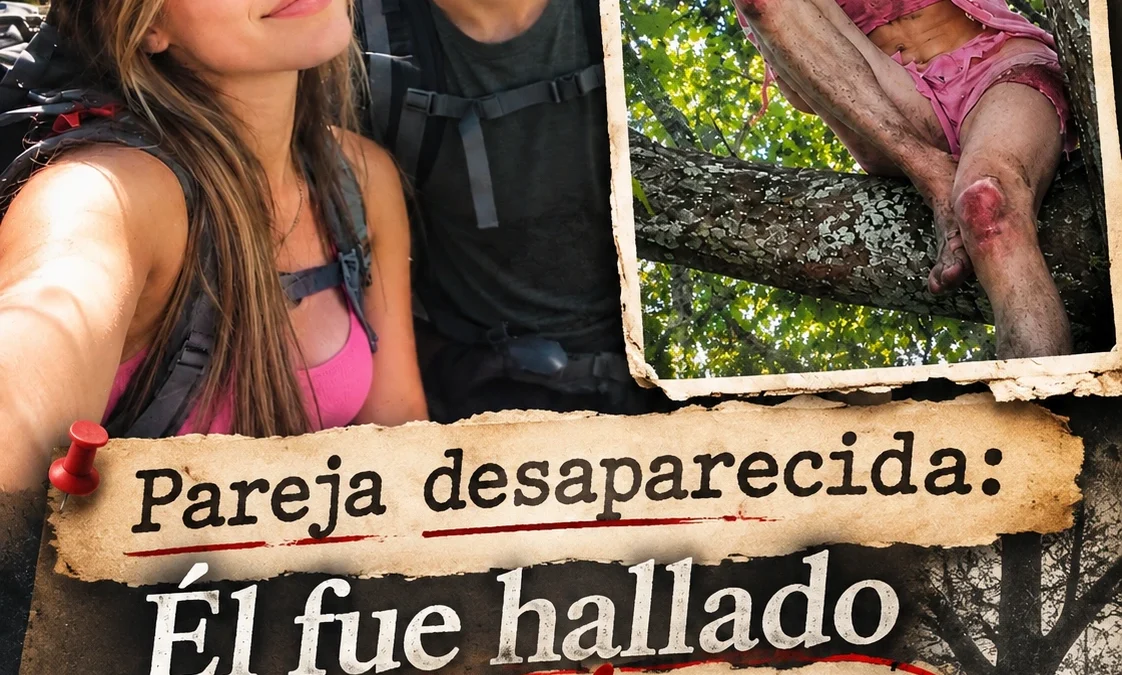
picturesque the Appalachins, endless mountains, and a dream trip for two.
20-year-old Melissa and her boyfriend Asher had planned this hike to the smallest detail.
The first days were like a fairy tale.
Bright photos, sincere smiles, and reassuring news to their families.
But on the third day, the connection suddenly drops, and the young couple fails to show up at the final station.
The police find only a locked car and an empty campsite in the forest.
[music] The answer seemed obvious.
A ordinary fatal mistake.
The young people simply strayed from the route.
But a hunter’s testimony shatters this version.
He claims that a mysterious third companion was seen beside them.
Who is that unknown stranger from the Appalachian Trail? What fate befell the couple in love? And what were these mountains truly hiding? We will figure all of this out in today’s video.
Enjoy watching.
To protect privacy, some names and details in the story have been changed.
Not all photos were taken at the actual location.
The [clears throat] trail to the Appalachian Trail seemed to Asher Jenkins and Melissa Higgins to be the beginning of something truly majestic.
At 20 years old, Melissa had always dreamed of an endless horizon.
And 22-year-old Asher was ready to follow her to the edge of the world.
They planned this hike down to the smallest detail, gathering all the necessary equipment and making a clear itinerary.
For both of them, it was supposed to be not just another tourist outing, but a full-fledged autonomous journey for which they had been preparing for several months in a row.
The young man’s friends later recalled during interrogations that Asher had checked the condition of the tent several times, updated the waterproof coating on the backpacks, and even studied the schedule of local ranger stations.
According to the parents testimony, preparations for hitting the trail took place in an atmosphere of complete calm.
The young people made a detailed list of items in advance, calculated the necessary supply of food for each day, and even left a printed copy of the topographic map on the kitchen table of their parents’ house with their overnight stops marked.
They planned to move along the main ridge without turning onto secondary or unmaintained sections.
Neither of them showed an inclination toward unjustified risk, and Asher himself, according to his work colleagues, was always distinguished by extraordinary meticulousness and discipline.
The first two days passed like a fairy tale.
The parents of the boy and girl regularly received notifications, bright photographs of smiling faces against the backdrop of majestic mountains, jokes about heavy backpacks, and short audio confirmations that they had reached the first planned points.
In these pictures, Melissa looked cheerful and happy, and Asher held trekking poles in his hands, demonstrating complete readiness for a long crossing.
The digital metadata of the scent files confirmed that the pair was moving strictly according to schedule, making planned rest stops near equipped tourist campsites.
The weather in those days remained dry and favorable for hiking, which excluded the possibility of sudden hypothermia or falling under a landslide.
Everything was going as usual.
However, on the third day, something broke.
The evening message never arrived.
Calls did not go through.
Phone numbers remained out of reach.
And the [music] next morning, the young people did not appear at the final station of the route where their family was supposed to meet them.
The relatives initially tried to reassure themselves with [music] the fact that in mountain ravines, mobile coverage often disappears for a long time, but the absence of the pair at the designated meeting place crossed out any everyday excuses.
Anxiety seized the relatives instantly.
The local police [music] and forest rangers were alerted.
Just a few hours after the official appeal from the parents, the first task force [music] was formed, which headed to the starting point of the route.
The first material investigative evidence was Asher’s gray sedan, neatly parked in the parking [music] lot for hikers.
The car was locked, and inside the glove compartment laid documents and some money, which excluded the version that the pair could have ended their journey early and simply left.
Investigators examined the car in detail, but found no signs of break-in, broken glass, or damage to the locks.
An inspection of the vehicle’s interior showed [music] that Asher and Melissa had taken with them only the gear that had been previously included in [music] the list for the hiking backpack.
Spare clothes that they did not plan to [music] take on the trail remained inside, as well as several empty water bottles.
The ignition lock was in the off state and the handbrake was securely engaged, indicating a calm and planned stop before hitting the trail.
Law enforcement officers recorded no signs that a conflict situation or attack had occurred in the parking lot.
According to the decoding of the mobile phone billing, which was later attached to the case file, the last automatic registration of the devices on the network took place on the same day that the last photo arrived.
After that, both phones simultaneously [music] stopped sending signals to base stations.
Communication specialists noted in their reports that such a simultaneous shutdown of two devices could indicate either their entry into a deep [music] blind spot of the terrain or a deliberate shutdown or mechanical damage to the devices.
Officers of the sheriff’s department interviewed an employee of the parking lot who was on duty on the day the young people arrived.
According to him, the gray sedan arrived in the morning and its passengers looked energetic and were in a great mood.
He recalled how the guy helped the girl put on a heavy backpack, after which they took several steps toward an information board with a map.
The guard confirmed that they were alone and did not attract undue attention from other visitors.
Rangers also checked a special glass box in which tourists usually leave entries in the log book before heading into the forest area.
Asher’s entry was there.
He clearly indicated his name, date, time of departure, number of group members, and planned date of return.
All these data completely matched the plan he had left with his parents.
This was the last official mark made by the young man’s hand.
By the evening of the first day of official searches, additional police forces, canine units, and local volunteers converged on the starting point.
The situation was complicated by the fact that the Appalachian Trail in this section ran through dense coniferous forests with terrain that significantly limited visibility.
However, the presence of a locked car with all personal documents and finances clearly proved to investigators Asher and Melissa had gone deep into the forest.
And it was there among ancient trees and rocky ledges that they suddenly stopped communicating.
Dear viewers, please like this video and subscribe to our channel by clicking on the bell.
In the meantime, we continue.
A large-scale search operation unfolded slowly due to the difficult terrain and dense forests of the Appalachian.
Investigators and volunteers began questioning everyone who might have crossed paths with the pair step [music] by step.
Combing the area required the involvement of a large number of people because the dense crowns of pines and thick bushes significantly complicated the visual inspection of the slopes.
Rescue teams divided the territory into separate squares, methodically inspecting every meter of the roadsides and ravines.
The search for witnesses yielded its first results.
A married couple saw them approximately 3 mi from the start of the trail.
The witnesses who gave testimony to the detectives recalled that the young people looked calm and cheerful, moved without haste, and walked confidently on the trail.
According to them, Asher and Melissa briefly greeted them, asking about the distance to the nearest source of drinking water.
This contact allowed law enforcement officers to fix more accurately the time interval of the pair’s movement on the initial segment of the path.
It was in this direction that the searchers soon discovered the abandoned camp of Asher and Melissa.
The search party stumbled upon it in a small clearing located slightly off the main trail.
Backpacks, sleeping bags, and the tent were [music] packed neatly.
This immediately caught the attention of investigators [music] as the picture did not resemble a sudden escape or panic abandonment of an [music] overnight site.
The tent was securely fastened with pegs, and inside were dry clothes, extra clothing, and flashlights that were in working order.
An inspection of the campsite territory showed that the personal belongings of the young people [music] remained practically untouched.
In the backpacks, investigators found a supply of food, camping cookware, and a first aid kit with a [music] standard set of medications.
Forensics recorded no signs of a struggle, damage to the tent fabric, or spilled liquid.
Everything looked as if Asher and Melissa had simply stepped out for a short walk, planning to return to the camp within a few minutes, [music] and for that reason, had not taken their main equipment with them.
A real turning point in the investigation occurred after a conversation with a local hunter who was returning through the same square in the evening.
The man described his meeting with the group in detail during interrogation and recalled seeing them from afar.
He reported an important detail to the investigators.
There were not [music] two of them, but three.
According to him, an unknown man and the guy with the girl were talking near the edge of a forest clearing.
The hunter emphasized that the conversation looked completely [music] peaceful, and the third man behaved naturally, as if he were their guide or a chance companion with whom they had met directly on the trail.
The investigators were seized by their first serious concern.
The version that the youth had simply lost their way was now under great question, and the figure of the mysterious third companion became the main puzzle for law enforcement.
If earlier the reference point for the search teams had been an accident or natural obstacles, now a human factor had appeared in the case.
Operatives began to analyze in detail all possible options for how an outsider could have joined the pair and why they decided to trust [music] a stranger in a remote mountain area.
Despite the hunter’s description, it was not possible to establish the identity of the third man.
The witness was able to describe only general features.
The stranger was of medium height, had a strong build, and was dressed in dark practical gear without bright tourist markings.
Due to the significant distance and twilight, the hunter did not see the person’s face, nor did he pay attention to small details of his equipment.
None of the other interviewed tourists who walked the trail that day could recall a man matching that description.
Law enforcement officers conducted an additional inspection of the ground around the abandoned camp, hoping to find clear shoe prints or other material traces of the present third companion.
However, the dry pine needle bedding and the rocky surface layer did not preserve clear treads.
Forensics retrieved only a few small fragments of dry branches that could have been broken during the movement of people near the tent and sent them to the laboratory for further analysis.
In parallel, detectives checked the lists of all registered visitors.
None of the checked men had discrepancies in their alibis, and local residents claimed they had not seen outsiders or suspicious vehicles in the area of the trail entrance.
Search teams continued combing the nearest gullies and ravines, but no additional items belonging to Asher, Melissa, or their mysterious companion could be found.
The investigation found itself in a difficult situation.
The presence of a neatly left camp indicated that the young people had not planned a long absence.
But the uncovered information about a third man completely changed the nature of events.
The disappearance of two people was turning from probable wandering in the forest into a case with a possible criminal subtext.
Despite the efforts of dozens of operatives, volunteers, and rangers, the forest remained silent, giving no new clue as to where Asher, Melissa, and their unknown companion went after leaving their tent.
A month passed.
[music] Search teams repeatedly combed miles of thicket, but no new traces could be found.
Investigators, operatives, and hundreds of volunteers inspected difficult slopes, ravines, and dense woods meter by meter.
But the forest remained indifferent to their efforts.
The weather in the mountain area was constantly [music] changing.
Heavy rains relentlessly washed away potential biological traces on the ground, and thick morning fogs regularly complicated the use of helicopters and thermal imaging equipment.
With each passing day, hopes of finding the young people alive grew weaker, and the local sheriff’s department was eventually forced to transfer the investigation to the status of a long-term and low prospect [music] search for missing persons under unexplained circumstances.
The story gradually turned into another gloomy legend of the Appalachian Trail until a ranger during a routine patrol of a remote sector of the forest noticed something unnatural in the crown of a tall asht tree.
This sector was located several miles from the main tourist trail and was considered virtually inaccessible to average hikers due to dense thicket, fallen trees, and very steep rocky terrain.
The ranger later noted in detail in his official report that a foreign spot of bright color, sharply standing out among the greenery and heavy branches of the forest giant, could attract attention from [music] afar.
On a branch at a height of several meters sat a man.
When the rescuers came closer, horror seized them.
It was Asher Jenkins.
The guy was extremely exhausted, dehydrated.
His skin was covered in dirt and numerous abrasions.
His physical state was on the critical border between life and death.
He barely held on to a thick bow, completely lacked control over his own movements, and was in a state of deep spatial disorientation.
The rescue team immediately deployed special climbing equipment to carefully lower him to the ground because any careless movement or sudden loss of consciousness [music] could lead to a fatal fall from a height.
But the most terrifying thing was his appearance.
Asher was dressed in women’s clothing, a pink jacket and trousers.
From photographs taken before the hike, relatives recognized the clothes.
The pink jacket and trousers belong to Melissa.
This fact [music] caused true shock among experienced operatives.
The women’s clothes were much smaller in size than the guy’s build, causing [music] the fabric to burst at the seams, being heavily deformed and torn in several places, but he continued to remain in them.
On his exhausted face, a wide, unnatural smile was visible, and his gaze was completely blank.
He smiled and looked insane, babbling incomprehensible fragments of phrases and not responding to his own name.
Medics who arrived as part of the emergency team recorded in their report that the guy was unaware of reality, did not respond to the light of flashlights, [music] and gave no answers to simple questions.
His pulse was weak, his body temperature critically low, and on [music] his wrists and ankles.
They found strange deep marks resembling old hematomas [music] and scratches from prolonged squeezing.
Police officers tried to establish at least minimal verbal contact with him right at the sight of the find, but Asher only randomly repeated isolated incoherent sounds, shook his head, and continued to smile eerily into the void.
Melissa was not nearby.
Operatives and volunteers immediately inspected the wide area around that same asht tree, combed neighboring thickets, checked every depression under roots and the nearest rock crevices, but no other traces of the girl or her personal belongings could be found.
The dry pine needle bedding under the tree was dry and showed no distinct signs of a prolonged stay by another person or any traces of a struggle.
And no one could yet understand what happened between the couple’s last message and the moment Asher was found in the tree.
Where exactly the guy had been all this month, how he managed to survive without proper food and drinking water in harsh wild conditions, and why he was wearing the women’s clothing of his missing girlfriend.
All these questions remained an absolute mystery to the investigators.
Asher’s mobile phone was not found on him and the pockets of the pink jacket turned out to be completely empty.
Police officers immediately organized Asher’s transportation to the nearest medical center for emergency assistance and an expanded examination.
Medics and forensics hoped that after stabilizing his physical condition, the guy would be able to come to his senses and reveal the secret of where Melissa was and what actually happened in the forest after their meeting with the unknown companion.
However, the initial medical conclusion regarding Asher’s mental state was discouraging.
The guy was in a deep psychotic reaction caused by severe psychological trauma or prolonged stressful exposure.
While the ambulance was heading to the hospital, the forensic team surrounded the area around the asht tree with yellow tape.
They photographed every branch in detail, collected microparticles of soil and bark, trying to reconstruct the details of how the exhausted guy could have climbed to such a height, and how much time he could have spent there.
An inspection of the trunk showed that small fibers of pink fabric remained on the lower branches, [music] matching the clothes worn by Asher.
This confirmed that the guy had climbed the tree on his own, scratching the bark with exhausted hands.
In the intensive care unit, doctors immediately began comprehensive therapy, including IVs to restore water balance and cleanse the body.
Doctors noted that the guy’s exhaustion reached the limit beyond which irreversible changes in internal organs begin.
His skin was cold and his muscles [music] had completely lost tone.
Even under the influence of sedatives, his facial expression changed periodically, returning to that same unnatural, frightening smile.
Investigators on duty near the room tried to catch every word the guy whispered in a state of delirium.
However, Asher did not utter a single coherent sentence.
He only repeated isolated fragments of phrases mentioned darkness and some sound resembling a click.
Not a single [music] specific geographical name or person’s name, apart from quiet babbling, could be heard from him.
Meanwhile, dog handlers with search dogs continued to work at the scene.
Service dogs picked up a scent at the foot of the ashtree, but after a few dozen yards deep into the thicket, the scent was completely lost on a rocky plateau.
It seemed as if Asher had appeared near this tree completely suddenly without any logical approach paths.
The young people’s relatives, having received news of Asher being found, arrived at the hospital immediately.
Melissa’s parents were in a state of despair because the guy’s return in such a terrible and insane state gave no answer to the [music] main question, where their daughter was and whether she was alive at all.
Asher’s mother could not recognize her son, whose gaze was indifferent and empty, even when she called him by name.
The investigation reached an uncertain and gloomy dead end.
The found guy, who was the [music] sole witness and key to solving the disappearance, could not provide any testimony due to his mental disorder.
Because when detectives showed him photos of Melissa or asked about the mysterious third companion, Asher only squeezed his fingers tighter on the blanket, looked into the corner of the room, and returned [music] to strange babbling.
Medics assured law enforcement officers that it was useless to expect clear or consistent testimony from the guy in the coming days.
Deep psychological trauma and severe exhaustion had deprived him of the ability to orient himself in time and perceive reality.
Then forensics focused on what he was found in.
The pink jacket and trousers belonged to Melissa.
The clothes were immediately seized, packed in sterile containers, [music] and sent to the forensic laboratory for a comprehensive analysis of microparticles.
On the fabric, several damages were found [music] that were not in the photographs taken before the hike.
Individual tears had the characteristic appearance [music] of snags on sharp objects, and the side seams were forcibly split open due to the mismatch of the women’s clothing to Asher’s build.
One of the tears on the sleeve contained small particles of fresh wood.
Expert botonists established that these were pine shavings and sawdust subjected to mechanical processing.
Nearby, experts noticed traces of industrial lubricant.
Laboratory spectral analysis showed that this substance had a high viscosity and a specific chemical composition with a high content of anti-wear additives.
This was strange.
The pair had hiked far from any industrial facilities, and the substances found on the clothes could not be explained by ordinary contact with the forest.
The regular hiking trail ran through protected areas where the use of heavy machinery or industrial equipment was strictly prohibited.
The presence of technological lubricant and fresh sawdust clearly indicated that Melissa’s clothes had been in an enclosed room or at a facility where machinery regularly operated.
Investigators began checking all locations near the route where such equipment could have been used.
Operatives requested cadastral maps of the area and lists of all private and municipal properties located along the protected zone.
Detectives plotted a radius of several miles on the map from the point where Asher was found on the asht tree and began methodically filtering out objects.
Soon attention led them to several properties associated with local residents.
Most of them turned out to be ordinary private farms or abandoned tourist campsites where no machines or lubricants of that type were used.
However, among them was one small industrial area that no one had previously considered important to the case.
This plot was located away from main roads and was hidden behind a dense strip of trees.
Initial search parties during the first days of the couple’s disappearance bypassed it, assuming that the young people had no reason to turn off the tourist trail toward a private commercial sector.
Now, investigators had to find out whether the third man seen with the pair could be connected to this very place.
Detectives reined rangers and local residents regarding the operating schedule and activities of this territory.
It turned out that woodworking equipment was regularly used at this location and the delivery of raw materials was carried out by trucks.
This [music] type of activity completely explained the presence of fresh sawdust and industrial lubricants found on the fabric of the pink jacket.
Forensics seized lubricant samples from forestry service vehicles for comparative analysis to definitively rule out the probability that the substance got onto Asher’s clothes while he was being removed from the tree by rescuers.
The test results came back negative.
The rescuer’s equipment used a completely different type of lubricating materials.
This definitively confirmed that the industrial trace was left on Melissa’s clothes before Asher was found on the asht tree.
Law enforcement officers began to analyze all access roads to this industrial zone in detail.
On the dirt roads leading to the facility due to the long time and rain, clear tread prints were not preserved, but the road forks themselves indicated that transport could unnoticed commute between the forest area and this plot.
The investigator’s concern grew as the first real physical clue had appeared connecting the exhausted guy and [music] his missing girlfriend to a specific location.
Analysts from the task force compiled a detailed report stating that Asher’s presence on the asht tree was likely the final stage of his movement from this abandoned or closed [music] industrial facility.
And since the guy himself could not move long distances [music] due to critical exhaustion, he was most likely brought to the forest sector by transport [music] and left to his fate.
The investigative team prepared requests to [music] obtain official authorization to inspect employees and the technical condition of adjacent private properties.
The investigation, which for an entire month had been marking time and relying only on gloomy legends of the Appalachian Trail, for the first time received a clear [music] and physically confirmed vector.
Every investigator understood that it was at this location that answers to the questions of what happened to Melissa [music] and who exactly stood behind this cruel crime might be hidden.
Experts were able to narrow the search down to a lubricant used on equipment at several local enterprises.
Detailed chemical analysis showed the presence of unique anti-wear components used exclusively for lubricating heavy industrial saws and mechanical units of woodworking machinery.
One such facility was a small sawmill.
This private territory was located not far from the protected zone, a few miles from the trail where tourists usually walked.
Operatives began checking people who worked or were frequently present on [music] the premises of this facility.
Investigators compiled a complete list of employees, regular suppliers of raw materials, [music] and local residents who had access to the equipment.
One of them immediately drew attention, not because of suspicious behavior, but on the contrary, because of his flawless reputation.
He was a 47-year-old local man, a father of two children, and an exemplary family man.
Neighbors knew him as a calm and friendly person.
Jeremy Farley had worked at the sawmill for a long time, enjoyed authority among colleagues, and had never had problems with law enforcement agencies.
After the disappearance of Asher and Melissa, he had even joined search groups and helped volunteers comb the forest.
Other participants in the search operations recalled during interrogations that Farley behaved very actively, showed sincere sympathy to the relatives, and was welloriented in the local thicket.
At first glance, there were no reasons to suspect him.
His reference from the local community looked completely clean, and he himself calmly communicated with law enforcement officers when they questioned residents of surrounding houses.
However, the detective responsible for checking the vehicles of the enterprises employees decided to conduct a reinspection of the cars that had access to the sawmill premises.
It was during the reinspection of his work pickup truck that the detective noticed a small leather keychain with a metal pendant in the shape of a mountain peak in the driver’s door pocket.
This trinket immediately aroused suspicion in the investigator.
In photographs, Melissa wore a piece of jewelry with almost the exact same symbol.
The girl’s mother, during initial interrogation, had described such a pendant as her daughter’s personal item, which she almost never took off during hikes.
The man explained that the keychain belonged to his daughter.
According to the detective’s words recorded in the report, Farley answered the question completely calmly without any hesitation or external signs of agitation.
He claimed that his child had lost the jewelry in the cabin a few weeks prior.
This could have remained just a strange coincidence had forensics not detected traces of biological material on the leather that could be linked to Melissa.
Laboratory analysis confirmed the presence of microscopic epithelial particles and DNA that completely matched samples from the missing girl.
Now, investigators had their first physical reason to link the local man to the missing couple.
The version of a random coincidence fell [music] apart completely.
But the main question remained, how exactly did Melissa’s item end up in his car? And what happened to the girl after she last stepped onto the trail? Detectives understood that any premature accusations [music] could spook the suspect, so they acted with maximum caution.
Round-the-clock surveillance was established over Farley’s house and [music] workplace, and the county prosecutor urgently signed a warrant for a full-scale search.
Having obtained search permission, investigators decided to check not only Farley’s car, but also the premises of the sawmill.
Forensics and undercover operatives surrounded the facility’s perimeter.
Everyone understood that on this closed industrial territory, physical evidence of a crime or traces of holding the missing girl [music] could be hidden.
What they found there changed the case in a matter of minutes.
Law enforcement officers entered the private property in the evening when the main shift of workers had already left the shop.
The man at that moment was near his house, unaware of the task force’s actions.
Detectives methodically checked every outuilding, lumber storage, and technical room, focusing on small [music] details that could indicate the presence of an outsider.
Investigators paid attention to a remote utility extension located at the very edge of the sawmill territory.
virtually adjacent to the forest area.
The structure had massive wooden walls and looked much older than the rest of the production [music] shops.
Access to it was limited and the door was locked with several heavy latches.
Everything indicated that this part of the facility was used not for household or operational needs of the enterprise, but was kept in strict secrecy from outside eyes.
Forensics posted a perimeter around the building and prepared special equipment to break the locks.
The behavior of an exemplary family man and friendly neighbor who just a week ago was helping to search for the young pair in the forests of the Appalachian was now unfolding before law enforcement from a completely different horrifying side.
Evidence found in his car left no doubt.
Jeremy Farley was directly involved in the disappearance of the tourists.
Operatives took a decisive step forward and opened the heavy door of the extension.
Without wasting a single minute, operatives entered the territory of his sawmill.
The air inside the room was heavy, saturated with the smell of damp moisture, old fuel, and wood shavings.
The operatives flashlights cut through the solid darkness to reveal massive walls built from roughly [music] processed pine logs.
In the remote extension, behind massive doors locked with heavy latches, [music] investigators found Melissa.
She was exhausted, dehydrated, and scared half to death, but alive.
The girl lay on a dirty daybed, chained by a light chain.
A metal ring encircled her ankle, and the other end of the chain was securely fixed to a massive iron stake embedded directly into the concrete floor.
The entire space around the daybed looked extremely squalid.
Nearby stood a plastic bottle with remnants of drinking water and an empty metal bowl.
Seeing the light of flashlights and police uniforms, she could not hold back her tears.
Officers who were the first to enter the extension later noted in reports that the girl initially covered her face with trembling hands, trying to protect her eyes from the harsh light.
She was dressed in faded foreign clothes that hung on her emaciated body and on her wrists [music] and neck.
Old abrasions, scratches, and bruises from prolonged squeezing clearly showed.
The girl could not immediately utter a single coherent word.
Her voice interrupted by heavy sobaike crying.
She only continuously whispered, Please for help, unable to believe that the horror was finally over.
The rescue happened just in time.
The girl was already on the verge of physical exhaustion.
Medical personnel who ran into the extension behind the operatives immediately performed a primary examination right on the spot.
They recorded critically low blood pressure figures, severe sluggishness of reactions, and a severe degree of body dehydration.
Medics emphasized that a few more days in such conditions without proper food and psychological assistance could have led to irreversible consequences for her life.
In parallel with providing first aid, forensics used special hydraulic cutters to cut the chain, freeing Melissa.
The girl was carefully wrapped in a thermal blanket and carried out of the extension on a stretcher to an ambulance.
The vehicle immediately departed under police escort to the Central City Hospital where a team of doctors, [music] resuscitators, and forensic medical experts was already waiting for her.
And Jeremy Farley was arrested right near his house.
The detention happened quickly and without [music] any resistance on his part.
Police cars blocked the driveway from the yard at the exact moment he was walking out of his own garage.
Operatives with weapons drawn ordered him to lie on the ground.
Farley made no attempt to run or resist.
His face remained completely calm and indifferent, as if he had calculated such an outcome in advance.
Steel handcuffs clicked shut on his wrists, after which he was shoved into the backseat of a patrol car and taken to the sheriff’s department for questioning.
At the same time, a large-scale investigative team began working on the sawmill premises.
Yellow barrier tape was stretched around the perimeter of the extension, and the entrance to the room was illuminated by powerful spotlights.
Forensics worked methodically, checking every square centimeter of the dirty floor, daybed, [music] and brick walls.
They retrieved the chain, lock, metal stake, as well as all personal belongings that were inside the locked doors.
On the floor, they found numerous shoe prints that completely matched the tread of Farley’s work boots.
An inspection [music] of the daybed itself gave investigators additional physical evidence.
On the dirty fabric of the mattress, they found fibers of pink material identical to Melissa’s jacket and traces of biological origin.
All these finds were packed in sterile bags and sent to the forensic laboratory for DNA testing.
Experts recorded that the room was completely isolated from the outside world.
The windows were boarded up with thick planks from inside and outside, [music] making the penetration of daylight impossible and muffling any sounds.
The news of Jeremy Farley’s arrest and the discovery of a living Melissa instantly shocked the local community.
Neighbors and work colleagues refused to believe that the man they knew as an exemplary family man, caring father, and active search group volunteer had turned out to be a cruel abductor.
Journalists from local publications arrived on mass [music] at the sheriff’s department building trying to get the first official comments from the leadership of the investigative [music] team.
The county sheriff made a brief statement to the press confirming the fact of the girl’s successful rescue and the [music] detention of the main suspect.
He stressed that thanks to operational actions and microparticles found on the guy’s clothes, they managed to reach the closed facility and prevent a tragedy.
However, the main question of the investigation remained open.
What exactly was happening in that extension for an entire month? What motives drove Farley? and how did the exhausted Asher end up in a tree in women’s clothing? Investigators hoped to receive answers to these questions during the first interrogations of the detainee and after Melissa’s condition stabilized and doctors allowed her to give official [music] testimony.
The girl herself at that time was in the intensive care unit under roundthe-clock police protection.
She was under the influence of sedatives and painkillers and her physical condition remained consistently severe.
Operatives understood that the most difficult stage of the investigation lay ahead which had to fully reveal all the details of this terrifying crime on the Appalachian Trail.
After several days in the hospital, Melissa was able to testify and tell what happened during that terrifying month.
Investigators together with a forensic psychologist conducted the questioning very carefully, recording every word of the girl on a video camera and voice recorder.
She was in an exhausted state, her voice constantly trembled, and the story was interrupted by long pauses and tears, but the girl was able to reconstruct in detail the chronology of what happened from the moment of their disappearance on the trail.
According to her, their meeting with Jeremy Farley occurred on the third day of the hike on the very section of the trail where they were last seen by the local hunter.
Farley introduced himself under the guise of a friendly local ranger, offered to show them a beautiful canyon hidden from tourists and lured them to his sawmill.
He maintained an extremely calm, confident, and friendly demeanor, easily gaining the trust of the young people by talking about the safety of local roots and asking about their schedule and [music] planned stops.
Asher and Melissa, expecting no threat from a local resident, willingly agreed to deviate from the main path to see the picturesque location.
When they stepped off the main trail and went deeper into the forest, the man suddenly changed his behavior.
His friendliness instantly vanished, giving way to cold aggression.
Drawing a weapon, he forced them to move toward the closed territory of the sawmill.
The young people tried to resist and persuade the attacker, but under the direct threat of firearms, they were forced to comply with all his orders.
There, at gunpoint, he locked them in the extension.
It was that same isolated room with thick planks on the windows and heavy latches from where not a single sound reached and where total darkness rained.
Jeremy turned out to be a subtle and cruel manipulator.
He did not simply hold them but methodically [music] destroyed their psyche.
He starved them, forced them to fulfill humiliating orders, played warped psychological games, and mocked their feelings.
Interrogation protocols recorded that Farley brought a minimal amount of food and drinking water only when the young people fulfilled his demands or obeyed his warped rules.
He forced them to sit for hours in complete darkness, [music] constantly convincing them that no one was looking for them, that the search teams had long since wrapped up the operation, and that their family had abandoned them.
The abuse of Asher was of a particularly cruel and systematic nature.
Farley saw how the guy tried to protect Melissa and offered psychological resistance and decided to completely break his will.
To definitively break Asher, Farley forced him to take off his clothes and put on Melissa’s items, [music] constantly mocking him.
The man methodically humiliated his dignity, mocked his helplessness, and forced the girl to watch this abuse, depriving the guy of his last strength to resist.
The guy’s psyche could not withstand prolonged hunger, fear, lack of air, and constant psychological pressure.
When Asher’s mind gave out and the guy went completely insane, Farley decided that he was no longer interesting, took him out deep into the forest at night [music] and placed him in a tree, leaving him to his fate.
According to Farley, during subsequent interrogation, he believed that the exhausted and insane guy would simply fall from the branch or freeze on the very first night, and his bizarre [music] appearance in women’s clothing would confuse the investigation and direct the inquiry down a false path if the body were ever found.
As for Melissa, he planned to keep her further, returning to her every evening after an ordinary family day.
The girl said that every evening after finishing work at the sawmill [music] and surrounding areas, he entered the extension, continuing to play the role of an orderly and cruel [music] master.
She lived in constant fear for her own life, being in complete isolation and not knowing if Asher was alive and what awaited her the next minute.
Investigators compared Melissa’s testimony with the results of forensic examinations and physical evidence seized from the extension.
All details matched completely.
Marks on the girl’s wrists corresponded [music] to the chain and microparticles of lubricant on Asher’s jacket were explained by the guy being in that same room near woodworking machinery.
Experts also confirmed that the structure of the fibers on the daybed fully corresponded to items seized during searches.
During interrogations at the sheriff’s department, Jeremy Farley tried for a long time to deny guilt, inventing various versions and claiming he was unfamiliar with the young people.
However, under the weight of irrefutable physical evidence, DNA analysis from the keychain, and the rescued girl’s testimony, he finally began to testify.
According to operatives, he recounted his actions completely dryly without a shred of remorse or emotion, describing every step in detail from the first meeting on the trail to the moment he took Asher deep into the forest area.
Farley explained his actions by a desire to completely control other people’s lives and feel absolute power over those who fell into his trap.
He confessed that he had long been watching lone tourists on the trail, studying their roots and looking for an opportune moment to implement his warped plans.
His work at the sawmill and knowledge of quiet corners of the forest allowed him to remain unnoticed for a long time.
Psychiatrists who conducted an initial examination of Farley at the prosecutor’s direction noted in their preliminary conclusion that the detainee demonstrated pronounced signs of sociopathy, cold-blooded calculation, and a propensity for manipulation.
He was fully aware of the unlawfulness of his actions, carefully hid traces of the crime, and at the same time continued to lead the ordinary life of an exemplary family man, communicate with neighbors, and participate in search operations alongside volunteers.
The reconstruction of that month’s events allowed the investigation to fully restore the chain of events on the Appalachian Trail.
An ordinary journey of two young people turned into a horror due to a fatal meeting with a man who for years hid his dark inclinations behind the mask of a friendly neighbor.
The collected evidence base proved to be irrefutable and exhaustive.
Detectives completed the formation of the indictment, transferring all collected materials, video interrogation protocols, and forensic examination results to the district attorney’s office to prepare for the upcoming trial.
The trial of Jeremy Farley became the highest profile event in the state.
The hearings took place in the county court where security measures were heightened to the maximum level due to colossal public resonance.
The courtroom was packed to capacity with journalists from local and national publications, representatives of public organizations, and outraged residents of the town.
Lawyers tried to portray him as insane, but the investigation meticulously proved that all his actions were cold, deliberate, and methodical calculations.
Farley’s defense attorneys filed motions for additional forensic psychiatric examinations at specialized institutes, claiming that their client allegedly suffered from a sudden mental disorder during the commission of the crimes [music] and could not fully realize his actions.
However, the state prosecution consistently shattered each of these arguments, presenting irrefutable physical evidence to the jury.
The prosecutor presented facts before the court.
Careful concealment of the place of detention, the presence of a speciallymade massive latch, a thoughtout system of isolating the extension from outside sounds, as well as the fact that after each torture session, the defendant returned to his own family and behaved completely routinely.
Forensic medical experts and psychologists who testified at the hearings as prosecution witnesses unanimously confirmed that Farley acted with conscious calculation.
His participation in volunteer search groups alongside rangers when he personally combed forest squares and communicated with investigators was recognized as a conscious attempt to control the course of [music] the investigation and hide traces of the crime.
Testimonies by the victim’s parents in the courtroom became the heaviest moments of the process.
Relatives of Melissa and Asher could not hold back tears, describing the unspeakable pain and state of uncertainty in which [music] they had spent a month of continuous searches.
The jury returned its verdict unanimously.
Jeremy Farley was found guilty on all counts of the indictment, including kidnapping, unlawful [music] deprivation of liberty, torture, infliction of severe bodily harm, and attempted murder.
Farley received several consecutive [music] life sentences without the right to parole.
Listening to the judge’s decision, the defendant maintained absolute [music] detachment.
Not a single emotion or sign of remorse appeared on his face.
His family was shocked by reality and left the town forever.
[music] Farley’s wife and children, who faced condemnation from the local community and constant pressure from the press, [music] changed their last names and sold their property to dissolve in another state.
The fate of the young people turned out difficult.
The physical and psychological blow inflicted by that month of isolation and torture left unhealed scars on their entire subsequent lives.
Melissa was able to find the strength [music] to return to a normal life.
Although night terrors haunted her for years, the girl underwent multiple courses of rehabilitation and long-term psychotherapy to learn once again how to remain in enclosed spaces [music] without panic attacks.
She gave up hiking in the mountains and never returned to the Appalachian Trail, trying to completely erase memories of that fatal route.
Asher was never able to fully restore his mind.
The deep psychotic trauma, prolonged exhaustion, and abuse he suffered in the enclosed space of the sawmill caused irreversible damage to his psyche.
Psychiatrists concluded that the guy had permanently lost touch with reality and could not independently care for himself or perceive the surrounding world.
He remained living in a specialized clinic.
The entrance to his room was open 24 hours a day for medical staff, and he spent most of his time by the window, staring indifferently at the street trees and not responding to the address of those around him.
Melissa visited him regularly, and every time she sat next to him and took his hand, warmth and peace appeared for a moment in the previously empty eyes of the guy, the only thing reminding of that happy guy from the Appalachian Trail.
She sat nearby for hours in complete silence, quietly telling him about everyday affairs and holding his emaciated palm in hers.
In such moments, his terrifying smile vanished, giving way to a barely noticeable piece.
But medics were never able to bring him back to real life.
The territory of the sawmill where the tortures took place was completely dismantled and demolished by decision of local authorities.
The main extension was torn down to the very foundation and construction debris was hauled outside the county so that this place would no longer remind anyone of the tragedy.
However, for local residents, this story remained a gloomy warning forever.
It proved how easily behind the ordinary mask of a friendly neighbor, exemplary family man, and volunteer, the embodiment of true and ruthless evil can hide, capable of destroying the lives of two young people on picturesque mountain trails.
Ladies and gentlemen, right now on your screen there are two links.
On the left is our latest video.
On the right is a square link to our channel.
Please like this video, write your thoughts in the comments, and then watch our other videos.
Thank you.
Cr: ABGRUND