El Alfa rechazó a su hijo por no transformarse, hasta que la criada escuchó que su ritmo cardíaco cambiaba.
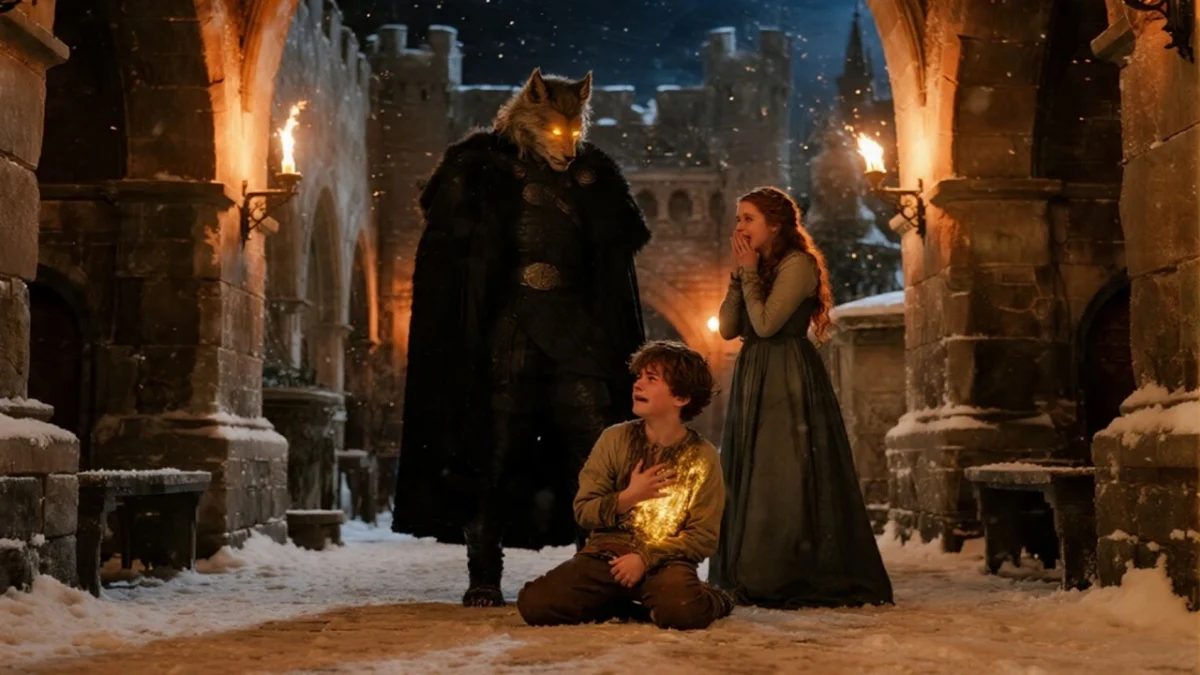
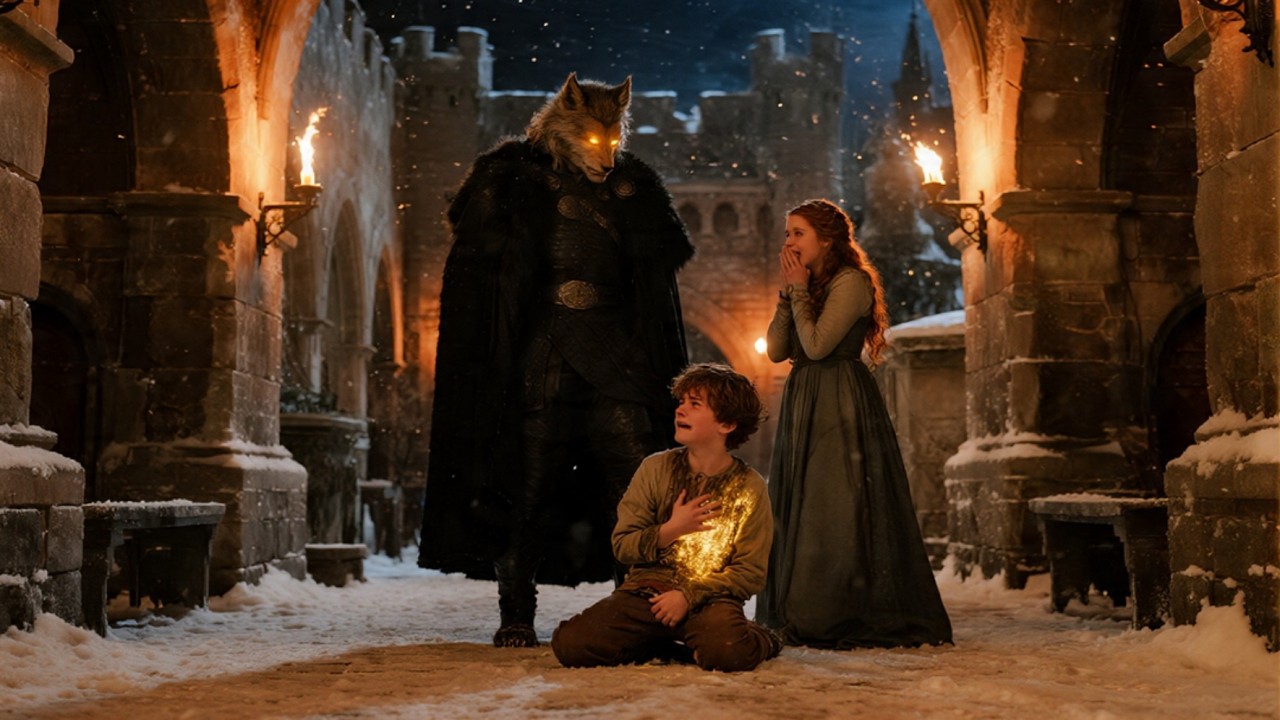
They say a wolf who cannot shift has no soul worth saving.
Alphadari believed that with every breath he took right up until the night his maid pressed her ear to his son’s chest and wept.
Not from pity, from recognition, because she had heard that heartbeat before in the old stories her dying mother had whispered to her under a blood moon.
Stories about a boy who would not shift like a wolf.
Because he was never meant to.
He was meant to shake the earth itself.
But by the time anyone understood what the boy truly was, the alpha had already signed the exile order.
The pack had already turned their backs.
And the one person who knew the truth was a woman with no rank, no voice, and no right to challenge the most powerful alpha in the Northern Territories.
She challenged him anyway.
This is not a story about a wolf finding his power.
This is a story about what happens when a father’s pride costs him everything.
And the woman who burns his whole world down, trying to save a child that isn’t even hers.
Chapter 1.
There are places in this world that carry their grief the way old wood carries rot slowly, invisibly from the inside out.
You would not know it to look at them.
The beams still hold.
The walls still stand.
But press your hand to the surface long enough and you feel it.
the soft, terrible give of something that has been dying for years.
Iron Moore was such a place.
Nestled against the northern highlands, where the treeine thinned, and the wind came down from the mountains like something with a grudge, [music] the Iron Moore Pack had stood for six generations.
Six generations of Ashevale alphas who had held this territory through war, through famine, through the kind of political maneuvering that left no blood on the floor, but plenty on the hands.
The pack was old.
Its roots went deeper than most wolves cared to dig.
And like all old things, it had learned to perform strength, even when it was quietly hemorrhaging.
The estate sat at the heart of it all, a sprawling stone structure that had once been a fortress, and still remembered how.
Its corridors were wide enough for wolves in midshift.
Its ceilings were high enough to swallow sound.
Fires burned in every major room from October through March.
And still the cold found ways inside, settling into corners and beneath doorframes like an uninvited guest that had simply stopped pretending to leave.
Alpha Darien Ashevail moved through these halls the way a man moves through spaces he no longer truly inhabits.
He was built for the role broad-shouldered, darkeyed, with the kind of face that had long ago settled into severity as its resting state.
His wolves respected him the way you respect a cliff face, without warmth, without question, and [clears throat] with the constant low awareness that the drop was always there.
He had earned every inch of that respect across 15 years of leadership, two territorial wars, and one alliance forged so cleverly that three neighboring packs still didn’t fully understand how they’d lost ground in it.
By every measurable standard, Alpha Darien Ashvail was at the height of his power, and he was crumbling.
Not visibly, not in any way his beta could document or his elders could address in council.
It was the kind of crumbling that happens behind the eyes in the two seconds before his expression assembled itself each morning, in the way he sometimes stopped in the corridor outside the east wing and stood very still, as though listening for something that no longer answered.
His mate had been dead for 6 years.
LRA Ashevail had died on the night of the winter solstice in a room that still smelled faintly of the herbs the healers had burned trying to save her.
And she had left behind a boy no one quite knew what to do with.
His name was Kale.
He was 6 years old, small for his age, with his mother’s dark hair and his father’s unsettling stillness.
He did not cry often.
He did not demand things.
He sat in window seats and watched the grounds with an attention that felt somehow too large for his small frame, as though he were cataloging the world for a purpose not yet revealed.
The pack children did not seek him out.
The pack adults did not seek him out either, though for reasons they would not say plainly and did not need to.
Kale had not shifted.
In Iron Moore, wolf pups began their first transitions around age four.
clumsy, painful, incomplete, but present.
The animal stirring beneath the skin, announcing itself.
By five, most pups had shifted a handful of times.
By six, it was simply part of who they were.
Kale had none of that.
No stirring, no transition, not a single moment where his eyes flared gold or his temperature spiked the way a shifting wolf’s did.
He was by every biological marker the pack healers had checked and quietly rechecked.
A boy with no wolf inside him.
The pack had an old word for it.
They did not say it to Alphadarian’s face.
They said it in kitchens and at the edges of training fields and in the particular silence that fell whenever Kale walked through a room.
It was a word that meant hollow, a word that meant incomplete.
It was in ways that required no elaboration, a humiliation.
and Darien Ashevail wore it the way proud men always wear their open wounds, pressed close, hidden deep, and absolutely festering.
Sable arrived in the estate three years ago.
She came without ceremony and with very little conversation, hired through a domestic agency that supplied human staff to pack estates, a practice that was common enough to be unremarkable, since wolves of rank rarely stooped to cooking or laundry.
She was given a small room, a list of duties, and the same orientation speech every new human staff member received.
Follow orders, address the alpha by title, do not touch anything in the East Wing, and do not engage pack politics at any level for any reason.
She had followed all of it carefully, consistently.
She was, by all appearances, exactly what she seemed, a human woman in her late 20s, economical in movement, with the kind of quietness that read as unremarkable until you realized too late that she had been in the room for an hour and you had simply stopped registering her.
Not because she was forgettable, because she had decided to be invisible, and she was very good at decisions she made.
She had been assigned to Kale’s care from the beginning.
Someone had to be.
The boy’s rotation of pack assigned caretakers had cycled through five women in his first three years, not because he was difficult, but because tending to a child the pack had quietly decided to mourn made people uneasy.
It required a particular kind of person to sit with that and not flinch.
Sable did not flinch.
She braided his hair in the mornings when he let her.
She left his meals at the precise temperature he preferred without being told twice.
When he sat in silence for an hour, she sat in silence, too.
And neither of them found it uncomfortable.
But sometimes, not always, not in any way that could be called a pattern.
She would look at him with an expression that did not belong in a caretaker’s face.
Not pity, not unease, something older than both of those things.
She watched him the way you watch a fire you do not have a name for yet with the careful breathless attention of someone who knows in the marrow of them that they are standing very close to something that is going to change everything.
She never said so.
She was still waiting for the right moment.
She did not know yet that it was coming for her.
Chapter 2.
The right of first fangs was never meant to be a cruel thing.
That was important to understand.
In its oldest form, it was a celebration, a pack gathering that honored the pups who had made their first transitions in the year just passed.
There was food and fire [music] and the particular kind of collective joy that wolfpacks generated when they moved as one body toward something worth celebrating.
The shifted pups were brought forward one by one, their names called into the cold highland air, and the pack answered each name with a sound that was half cheer and half [clears throat] howl, something that existed in the space between human and animal, and belonged entirely to neither.
It was sacred.
It was old.
It was, on every other occasion, Sable had witnessed it from her careful position at the edges of things, genuinely beautiful.
This year, the beauty had a blade in it.
The ceremony was held in the estate’s great courtyard, torches mounted along the stone walls, and the highland sky pressing down overhead, colorless, low, the kind of sky that felt like a held breath.
The pack had assembled in the tiered arrangement their hierarchy demanded.
Elders nearest the deis, warriors flanking, families arranged behind by rank.
At the far edge of the gathering, in a cluster that carried itself with the particular self-satisfaction of guests who know their presence is politically significant, [music] stood the Grey Warden delegation.
Their beta, Ozri, was a tall man with pale eyes and the unhurried manner of someone who had never once needed to rush, because the world had always eventually arranged itself around his patients.
He stood with his hands clasped behind his back and watched the proceedings with an expression of courteous interest.
That was Sable had decided from the moment she first laid eyes on him 2 days prior entirely manufactured.
He was not here for the ceremony.
He was here to watch what the ceremony revealed.
The shifted pups were called forward first.
Seven of them this year, ranging from newly four to just turned six.
Each one luminous with the particular pride of a child who has done something tremendous and knows it.
The pack responded to each name with that collective sound.
And it rolled across the courtyard and up the stone walls and into the colorless sky.
And even Sable, standing in the narrow servants corridor that ran along the courtyard’s eastern edge, felt the resonance of it move through the floor beneath her feet.
Kale stood near the deis.
He had been placed there deliberately, not cruy.
Or so whoever had made the decision had probably told themselves.
He was the alpha’s son.
He had to be present.
He stood in his good clothes, the dark wool jacket that had been let out twice in the past year as he grew, and he watched the other children with an expression that gave nothing away.
His hands were at his sides.
His shoulders were straight.
The iron wolf pendant, the ashvail sigil, small and dark against his collar, caught the torch light once, briefly, and went still.
He did not fidget.
He was 6 years old, and he had already learned how to make himself unreadable, and Sable did not know whether to be proud of him or devastated for him.
She settled privately on both.
When the last pup’s name was called, and the cheer had faded, Alpha Dariion stepped forward.
He was dressed for formality, the full ceremonial weight of his rank on his shoulders, the ashvail crest at his chest.
He looked, Sable thought, like a man who had rehearsed what he was about to do enough times that he had finally drained it of feeling.
That was the only way she could account for how steady his voice was.
He did not raise it.
He did not need to.
The courtyard had gone completely silent.
He spoke of duty first, of what the pack required of its bloodline, of the weight of the Ashevail name, [music] and what it meant to carry it not as privilege, but as obligation.
He spoke with the measured cadence of a man delivering a verdict he believed was just, even as it cost him something he would never be able to price accurately.
Then he looked at Kale, and Kale looked back at him, steady, unblinking, 6 years old.
Darien reached down and unclasped the iron pendant from his son’s collar.
The sound it made, the small metallic whisper of a chain lifting away from fabric, was somehow the loudest thing in the courtyard.
Until you shift, Darien said quietly.
You will be raised as a ward of this estate.
The Ashvale line requires what you cannot yet give.
When that changes, he paused, one breath.
When that changes, so will this.
He stepped back.
The pack did not protest.
Several of the elders looked at a fixed point above the crowd, somewhere neutral and safe.
A few of the younger wolves, ones with children of their own among the shifted pups, looked briefly relieved, and then, recognizing themselves, looked ashamed of it.
Ozri of Grey Warden watched with those pale, patient eyes, and allowed himself one small nod, as though something had been confirmed.
Kale was escorted inside by the estate’s head of staff.
He did not cry.
He did not look back.
Sable was already at the top of the east-wing staircase when he arrived.
She had left her position in the corridor the moment Darien reached for the pendant, moving quietly through the servants passages with the particular speed of someone who has decided that being useful matters more than being inconspicuous.
She had his room prepared, the lamp turned low, his preferred blanket folded back.
She stood and she waited, and when the door opened, and he walked in, dryeyed, composed, carrying himself with a dignity that made her chest ache, she said nothing.
She simply moved to help him out of his jacket.
He led her.
He sat on the edge of the bed and she worked through the familiar routine of settling him for the night.
And neither of them spoke because some things do not improve with language.
And both of them somehow already knew [music] that.
When she reached to adjust his blanket, her hand came to rest on his chest, a gesture she had made a hundred times, automatic as breathing.
She stopped.
The rhythm beneath her palm was wrong.
Not wrong.
That was the wrong word.
It was layered.
A heartbeat and then beneath it, slightly offset, another as though two separate pulses had learned to share a tempo without quite merging.
Steady, deliberate, like a conversation between two things that had always known each other.
She did not move her hand.
She stayed very still for a long moment, her face carefully arranged into nothing.
and she listened to the boy’s impossible heartbeat in the low lamp light while the rest of the estate settled into its evening silence around them.
She tucked him in.
She turned out the lamp.
[music] She walked to her own room at the end of the hall, sat down on the edge of her narrow bed, and stared at the wall.
She did not sleep.
Chapter 3.
Decay does not announce itself.
It does not arrive at the door with its name on its lips.
It seeps.
It works through the mortar between things, between people, between loyalties, between the careful arrangements that hold a household together.
When the thing at its center has gone quietly wrong, you notice it first in small ways.
A conversation that stops when you enter a room, a duty reassigned without explanation.
the particular quality of silence that exists not because there is nothing to say, but because everyone has decided separately and without discussion that saying it would cost too much.
The weeks following the right of first fangs moved through Iron Moore estate like water through cracked stone, slowly, inevitably widening everything it touched.
Ozrich of Grey Warden returned 11 days after the ceremony.
Officially, the visit was a routine diplomatic exchange trade agreements, border acknowledgements, the procedural maintenance of an alliance that had never been warm, but had always been functional.
He brought two attendants and a gift of Highland grain spirits that nobody in the estate particularly wanted, and he requested 2 hours with Alphadarion, which stretched [music] both times to four.
Sable served the refreshments on both occasions.
She was efficient and unobtrusive, and she did not appear to listen, which meant that Ozri spoke freely while she was in the room.
He was skilled at conversation, the kind of skilled that looked effortless and wasn’t.
He asked about Iron Moore’s eastern border tensions with the precision of a man who already knew the answers.
He raised the question of pack succession with the delicacy of a physician probing a wound he had personally arranged.
A pack of iron moores standing, Ozrich said on the second visit, swirling his spirits without drinking them, deserves a succession line that inspires confidence.
In your allies, and a pause shaped like a courteous afterthought, in those who might otherwise become your rivals.
Alphadarion said nothing for a moment.
Then Grey Warden’s concern for Iron Moore is noted.
Ozrich smiled.
It did not reach his pale eyes.
Merely the concern of a neighbor.
Sable collected the empty glasses and left the room and stood in the corridor outside for 3 seconds longer than she needed to, cataloging every word.
Lady Vessa arrived before the month was out.
She came from the southern territories with an escort of six and a reputation that preceded her like whether you felt it before you saw it.
She was alphaborn, which meant she had grown up understanding power as a language, and she spoke it fluently.
She was composed, striking, and possessed of the particular warmth of a fire that gives light without giving heat.
Her interest in Darien was architectural.
Sable could see it from across a room, the way Vessa assessed the estate, the way she cataloged the pack dynamics with quick, intelligent eyes, the way she factored everything and everyone into an internal structure of use and leverage.
It was not malicious.
That would have been easier.
It was simply the way she had been built, or perhaps the way she had been made.
and there was a cold efficiency to it that settled over the estate like the Highland fog.
Darien did not appear comfortable in her presence.
He also did not appear to be ending it.
Kale began disappearing to the edges.
Not dramatically, not in any way that generated immediate concern.
He simply stopped occupying the center of rooms and took to the margins instead.
Window seats, corridor corners, the rear bench at pack meals where the light was poorest.
The other children had begun the work that children do when adults give them permission without giving them instructions.
They filled in the shape of what they’d been shown.
A boy without a wolf was not worth including.
That was the shape.
They filled it enthusiastically and thoughtlessly, the way children often enact cruelties they have not yet developed the vocabulary to recognize as cruelties.
Sable intervened twice.
The first time was quiet a word in the right ear, a redirection so smooth that the children involved weren’t certain anything had happened.
The second time required slightly less subtlety when she found three boys from the warrior rank families blocking Kale’s path to the training yard with the particular blocking that pretends to be accidental and isn’t.
She did not raise her voice.
She did not need to.
She simply stopped, looked at each of them in turn with an expression that communicated without words that she had cataloged their faces and their names and their parents’ positions within the pack hierarchy and would not be forgetting any of it.
[music] They moved.
Kale said nothing afterward, but he walked beside her back to the estate, and his shoulder was almost touching her arm, and she counted that as something.
The reprimand came the following morning, delivered by the estate’s head of staff with the pained expression of a man performing a duty he had not designed.
She had overstepped.
[music] Her role was maintenance of the ward’s physical care, not intervention in pack social dynamics.
A formal note had been placed in her record.
She thanked him for informing her.
She returned to her duties.
She did not change what she intended to do the next time.
The archive room sat at the end of the estate’s lower corridor, cool, narrow, smelling of tallow candles and old leather, and the particular dust that accumulates on records no one has touched in a very long time.
Sable accessed it three times across two weeks, each visit disguised within a broader task, inventory of household records, cross-referencing supply accounts, maintenance of the domestic log.
She was looking for something specific.
She did not have its name yet.
She had only its shape, a gap in the knowledge she was slowly assembling, a missing piece she could sense the outline of without being able to see the thing itself.
She did not find it, but she found where it had been.
Three sections of the historical bloodline records documents that should have run continuously through six generations of Ashev lineage had gaps in their sequence, not disordered, not damaged, removed.
The binding holes remained where the pages had been stitched, and the numbering on the surrounding documents skipped in increments that were too consistent to be accidental.
Someone had taken those records deliberately, recently enough that the binding holes had not yet gathered the same weight of dust as the pages around them.
She sat with that knowledge for a long moment in the cool, quiet room.
Then she returned the remaining documents to their shelf, and noted in the domestic log that the archive was in satisfactory condition.
He was always back in his bed before dawn.
That was the part that made it so easy to miss.
The sleepwalking left no evidence except the fine highland soil on Kale’s feet each morning.
Soil that matched the ground near the old stone well at the far edge of the estate grounds and the change in the wild flowers growing in that narrow strip of earth beside it.
Blooms out of season colors that did not match the species.
a cluster of white winter flowers appearing overnight in the first week of autumn, a ring of deep violet around the wellstone base that had not been there the previous evening, and offered no botanical explanation by morning.
Kale never remembered leaving his bed.
He answered her questions with the honest bewilderment of a child genuinely reporting the contents of his own mind.
He had dreamed, he thought, of music underground close.
She noted the soil.
She noted the flowers.
She took to checking each morning which direction the change had moved.
She told no one.
Chapter 4.
She arrived the way old things often do without warning and without apology, as though the world had simply always contained her, and you were only now noticing.
The bone caller came on foot, which was unusual.
Most traveling elders of rank arrived by horse or by pack escort, the trappings of their position preceding them like a formal announcement.
This one carried a walking staff worn smooth by decades of use, a pack across one shoulder that appeared lighter than it should have been for someone journeying through Highland country in autumn, and an expression of such complete self-containment that she seemed to generate her own weather.
She gave her name as Marin would later record it in the guest log, Elder Thessalie, unaffiliated, traveling north.
Her rank as bone collar was noted by the estate’s senior wolf on door duty, who recognized the particular markings on her staff and responded accordingly, stepping back with the instinctive difference that bone collars commanded in wolf culture, regardless of pack affiliation.
The custom of shelter was ancient and non-negotiable.
You did not turn a bone collar from your door.
The reasons were partly superstitious and partly practical and entirely the kind of thing that did not require examination.
You simply did not do it.
The way you did not whistle near a new grave or break bread before the blessing at a packed table.
Sable was assigned to the welcome service.
The great hall held perhaps 30 wolves that evening, a standard assembly for a weekn night.
The upper rank families taking their meal together in the way that reinforced the social architecture of the pack without anyone needing to call it that.
The fire was well built.
The food was adequate.
The conversation carried the particular slightly elevated register of a room that contains a guest of note and is performing collectively and without discussion a version of itself it considers impressive.
Elder Thessalie ate without comment and observed without appearing to.
Sable moved through her service rotations with the practiced efficiency that had made her invisible for three years, and she watched the bone collar the way the bone collar was watching the room carefully, without directing her attention anywhere obvious.
The old woman’s eyes were dark and extraordinarily still.
They moved across the assembled wolves with the methodical patience of someone reading a text they have encountered in many different forms and are now cross-referencing.
She paused on faces briefly, moved on, paused again.
It was not rude.
It was simply the behavior of someone for whom looking was a form of work.
Then Kale walked through the room.
He was not supposed to be at the evening meal.
His meals had been moved to the east wing following the right, part of the quiet restructuring of his place in the household’s daily life.
He had come, Sable would learn later, to return a book he had borrowed from the hall’s reading shelf, a task so small and routine that no one had thought to tell him a guest was present.
He crossed the near edge of the hall, 7 seconds, perhaps 8.
Elder Thesal’s eyes found him the moment he entered, and did not leave him until he was gone.
It was not the prolonged gaze of curiosity or pity the kind Cale received often enough that he had developed the particular skill of not registering it.
This was different.
This was the focused, arrested attention of someone who has been searching for something and has [music] just unexpectedly found it.
The old woman set down her cup.
Her hands, Sable noticed, were very still on the table.
The kitchen was empty by the time Sable reached it.
The junior staff had finished the washing up and retired, and the fire had been banked down to a low, patient burn.
She was preparing the next morning’s dry stores, a task that required no thought, and therefore left her mind entirely available for the kind of quiet, methodical circling she had been doing since Kale had crossed the hall.
She did not hear the bone caller enter.
She simply became aware between one breath and the next that she was no longer alone.
And then the old woman’s hand closed around her wrist with a grip that was startlingly firm for someone who had looked in the hall so unhurried.
Sable did not pull away.
She went very still, the way she went still when something important was happening, and she could not afford to miss any of it.
The bone collar looked at her with those dark arrested eyes and for a moment said nothing, as though she was deciding how much truth the moment could hold.
Then the boy’s marrow remembers something his blood was made to forget.
Her voice was low, not a whisper.
A whisper implies fear of being heard.
This was simply a voice that had learned to carry weight without volume.
Be careful who learns that before he does.
She released Sable’s wrist.
She stepped back.
She looked briefly as though she might say something more and then appeared to decide against it with the expression of someone who has learned the hard way that giving people more truth than they can immediately use is its own kind of cruelty.
She left the kitchen.
By dawn her room was empty, and her name in the guest log was the only evidence she had been there at all.
Sable wrote the letter the same night.
She sat at the small desk in her room with the lamp turned as low as it could go without guttering.
And she wrote to her mother to the woman she had not written to in 4 years who was dying in a mountain village 3 days travel north who had taught her the old stories when she was small and then later begged her to forget them.
She kept the letter brief.
She did not explain her reasons or her context because her mother would not need either.
She asked only about the children in the stories, the ones who did not shift, not because they were broken, the ones for whom shifting was simply not the right word for what lived inside them.
She asked if her mother remembered what they were called.
She sent it with the morning courier before she could change her mind.
8 days.
She counted them with the specific patience of someone who has nothing to do but wait and too much to do to stop.
She tended to kale.
She monitored the flowers at the well.
a new development.
They were growing in a pattern now.
She was almost certain of it, [music] though the pattern was one she could not yet read.
She served Lady Vessa’s ongoing visit with impeccable neutrality.
She noted [music] in the private architecture of her own mind, the way Ozri’s most recent diplomatic inquiry had shifted from general succession questions to specific ones about Lyra Ashv’s bloodline origins.
She noted it, and she said nothing, and she waited.
The response arrived on the eighth morning, carried by a courier who mentioned without being asked that the woman who had sent it had pressed it into his hands with the urgency of someone who was not sure she had time to spare.
The handwriting was barely legible, shaking, effortful.
Each letter assembled with the determination of a woman writing through pain.
Sable read it once.
Read it again.
Pressed it flat on her desk with both hands and looked at it for a long airless moment.
Three words circled in red ink so pressed into the page it had nearly torn through.
The hollow ones and below in the cramped trembling script of a dying woman trying to say something important before she ran out of time.
Run, Sable, or stay and be ready.
There is no third option.
Sable sat at her desk while the morning moved around her, and the estate woke into its daily noise, and the lamp burned down to nothing.
She read the letter a third time.
Then she folded it, pressed it small, tucked it inside the lining of her boot, close to her skin, where she would feel it with every step she took.
She was not going to run.
She had made that decision before the letter arrived.
She simply hadn’t been sure until now what she was staying for.
Chapter 5.
There is a particular kind of stillness that is not peace.
It looks like peace from a distance.
It has the right shape.
Quiet hands, measured breathing, eyes that rest rather than dart.
But press close enough and you feel the difference.
The way you feel the difference between a frozen river and a still one.
One has simply stopped moving on the surface.
Underneath everything is running.
Iron Estate had that quality now.
Three separate currents moving beneath the same ice.
None of them aware of the others.
all of them in their own way running toward the same cold center.
Darien noticed it on a Tuesday.
He could not have said why Tuesday specifically, only that he had crossed the east corridor on his way to a meeting with his border captains, and Kale had been sitting in the window seat at the far end, which was not unusual, and he had almost walked past, which would have been his habit when something made him stop.
The boy was not reading.
He was not watching the grounds.
He was simply sitting, hands folded in his lap, heads slightly tilted the posture of someone listening with great concentration to something very specific.
There was nothing to hear.
The corridor was empty.
The wind outside was low.
Darien stood in the passage and watched his son listen to silence and felt something move through him that he did not immediately have a name for.
He cataloged it slowly, the way he cataloged threats methodically without the luxury of flinching.
It was not the familiar burn of shame that Kale’s existence had carried for him these past months.
It was not grief, which he knew the precise texture of by now.
It was older than both of those things.
It lived lower in the body.
It was fear, not of what the boy was failing to become.
Fear of what the boy might already be quietly, [music] privately, in ways that Darien did not have the framework to understand and could not ask about without admitting he had been watching.
He said nothing.
He kept walking.
He sent for the pack healer before the afternoon was out, framing the request as routine wellness care, the kind of thing a responsible alpha arranged for a ward of the estate.
Marin accepted the assignment without comment, which meant either she suspected nothing or she suspected everything and was as careful as he was.
Darien was not sure which possibility concerned him more.
Ozrich received the report on a Wednesday.
It arrived in the particular form that useful information always arrived from inside an estate, fragmented, slightly delayed, shaped by the limitations of someone who had access without comprehension.
His informant was junior staff, which meant proximity without context, which meant the report contained facts that Ozri had to interpret himself.
Two facts specifically.
The first, the alpha’s son had an abnormal heartbeat.
The estate healer had been called to examine him, which in itself was not remarkable.
What was remarkable was the notation Ozri’s informant had overheard in the corridor outside the healer’s preparation room, a conversation between Marin and her assistant, in which the word layered had been used in reference to the boy’s cardiac rhythm, followed by a silence that suggested neither of them knew what to do with the word.
The second, the human maid assigned to the ward’s care, had made three separate visits to the estate archive room across the past two weeks, each disguised within domestic tasks, each visit lasting longer than the task required.
Ozri sat with these two facts for a long time.
He did not know what they meant.
That was the honest accounting of it, and Ozrich was, if nothing else, honest with himself.
But he understood instinctively what most politically intelligent people understood.
That information you cannot yet interpret is not useless.
It is simply waiting for the right key.
And in the meantime, the person who holds it has leverage over everyone who does not.
He sent three messages before the week was out.
One to a contact in the high council’s administrative office.
One to a scholar of old bloodline records who owed him a considerable favor and one to his informant inside Iron Moore estate instructing them to broaden their attention.
the maid specifically.
Whatever she was looking for, he wanted to know when she found it.
Sable felt the shift on Thursday.
She could not have pointed to its precise cause only to the accumulation of small things that her instincts assembled into a conclusion.
Her conscious mind then had to catch up with a junior staff member whose natural movement patterns had begun subtly to intersect with hers too consistently to be coincidence.
The sense of a presence at the edge of corridors she had just left.
the particular way conversation redistributed itself in the servants’s hall when she entered, not stopping exactly [music] but reorganizing the way water moves around a stone.
Someone was watching her.
She did not know who.
She did not try to find out immediately because trying to find out would confirm that she knew she was being watched, which would confirm that she had something to be cautious about, which was the last confirmation she intended to provide.
She stopped visiting the archive.
She redirected herself quietly and completely to the place where the most important information had always been, not in the records of what had been written down, but in the living, breathing six-year-old source of the question itself.
She found him at the well, not sleepwalking.
It was midafter afternoon, and he had come deliberately, sitting on the low stone edge, with his feet dangling and his attention directed downward toward the water below.
The wild flowers had done something new.
They had grown up through a crack in the wellstone casing itself, pale and determined, flowering two months past their natural season.
Sable sat beside him.
She did not open with the question she had come with.
She had learned over 3 years that Kale responded to patients the way most children responded to invitation.
It made him feel that the conversation was his to enter rather than hers to extract.
After a while, she asked him what he heard when he came here.
He considered the question with the seriousness he brought to all things.
Someone singing, he said, underground.
She kept her voice even.
Is it the same every time? No.
He tilted his head slightly.
That listening posture she had seen in Darien’s corridor.
She realized the same angle.
She filed that away.
It’s been getting louder.
She asked, Does it scare you? He was quiet for a long moment, long enough that she thought he might not answer.
He looked down into the dark water of the well, and whatever he saw there or didn’t see, it settled something in his expression.
No, he said finally.
He looked up at her.
It sounds like my name.
The wild flowers moved in a wind that was not blowing.
Sable held very still and did not let what was happening in her chest reach her face.
Okay, she said quietly.
She stayed beside him until the light changed.
Chapter 6.
The package arrived on a Friday morning, carried by the same courier service she had used to send her letter north.
It was small, smaller than she had expected, which was its own quiet devastation.
A whole life, and what remained of it fit inside a box the size of a bread loaf, wrapped in oil cloth, and tied with the kind of practical knot her mother had always favored.
Functional, no excess.
Even in death, the woman had been economical.
There was no letter accompanying it, only a note from the village caretaker, three lines, formal and brief, confirming what Sable had already understood the moment she saw the package, that she had run out of time to ask her follow-up questions, and her mother had run out of time to answer them.
She carried the box to her room.
[music] She set it on her desk.
She stood and looked at it for a moment with the specific stillness of someone deciding how much of themselves they can afford to spend on grief when there is still work to be done.
Then she untied the knot.
There were small things inside.
A carved bone comb, a folded piece of embroidery half finishedish and now permanently so, a dried flower of a type that did not grow in the Highland region, which meant her mother had carried it from somewhere south and kept it for reasons she would never now explain.
Sable held each item briefly and set it aside with the care of someone handling things that have ceased to be objects and become instead the final vocabulary of a person who could no longer speak.
The journal was at the bottom.
It was old, genuinely old, not the worn but recent old of something heavily used, but the deep structural old of something that had been preserved deliberately.
The leather cover had been treated with something that had kept it supple despite decades, possibly longer.
The binding was handstitched, the thread still tight.
On the inside cover, in her grandmother’s precise, formal hand, the hand of a woman trained in archival work, for whom penmanship was professional obligation, a name and a date.
The date was 43 years ago.
The name was Iron Moore.
Sable sat down.
Her grandmother had been a recordkeeper.
She had not known this.
Her mother had never said it, had said very little about her own mother.
in fact with the particular selective silence of someone protecting something they were not sure could survive exposure.
But the journal made it plain from its opening pages.
Her grandmother had served the Ironore pack archive for 11 years, beginning in the era before the Pack elders had voted to restrict archival access to wolves only.
She had been, by her own spare accounting, good at the work, careful, trusted, trusted enough that when she left, when the restriction passed, and her position was quietly eliminated, along with every other human role in the pack’s formal recordkeeping, she had not left empty-handed.
Not stolen, the first page clarified, in a line that read as though her grandmother had anticipated the accusation across four decades.
Given.
Elder Corin pressed these into my hands the night before the vote passed.
He said, Keep them where they will not be found by the people who are trying to lose them.
He said, Someday someone will need to know.
Below that in the same careful hand, I did not understand what I was keeping.
I kept it anyway.
That is what you do with truth when someone trusts you with it.
Sable turned the page.
The records were transcribed in full.
Her grandmother had copied them by hand from the originals before surrendering the copies back to the archive and keeping only her transcription.
The originals were what had been removed from the Iron Moore files.
The transcription was what Sable now held.
She read slowly.
The Ashenvil bloodline was documented across 12 generations, a lineage that ran parallel to the standard pack hierarchies without ever sitting cleanly within them.
They had not been alphas, though they carried alpha blood.
They had not been warriors or healers [music] or betas.
The pack classifications had simply never applied to them because they had not been oriented toward the pack the way other wolves were oriented toward it.
Their bond was older than pack law.
Older, the record suggested, with the careful neutrality of archival language, than the concept of hierarchy itself.
The word used across every generation of documentation was the same.
Warden.
Sable read its definition three times because the first two did not fully penetrate.
Not a rank, not a role that could be assigned or revoked.
A warden was by the understanding of the wolves who had lived alongside them.
The living point of connection between a wolf territory and whatever force had animated that territory before wolves had claimed it.
Not a guardian in the protective sense, an anchor, the thing that kept a piece of land coherent present, bounded, known to itself.
They did not shift into wolves.
The records were careful here, hedged with the uncertainty of scribes documenting something they had observed, but could not fully systematize.
What wardens became, in the moments their nature expressed itself fully, did not have a clean name.
The descriptions across generations used different words, the land moving through them, the territory speaking, the old shape, but the consensus was consistent.
It was not a wolf.
It was something that had been here before wolves, something that did not submit to ranking because ranking was a system invented by creatures far younger than itself.
They could not be claimed by alpha law.
They could not be colored by pack hierarchy.
They existed by their very nature outside the architecture of control and therefore to every system of control that had ever encountered them.
They were the most dangerous thing imaginable.
The Ashenvil line had been believed extinct for two generations.
LRA Ashvail, born Lyra Vain, mated to Alphaderion, dead 6 years, had been the last documented descendant, and she had left a son.
Sable closed the journal.
She sat at her desk while the estate moved through its evening around her.
The sounds of the dinner service below, footsteps in the corridor, a door closing somewhere down the hall.
The lamp burned.
The window darkened as the Highland Knight came down.
She sat with what she now knew.
The way you sit with something massive carefully without moving too quickly, feeling for the edges of it.
Kale was not broken.
He had never been broken.
He had been born into a world that classified everything by the standards of its own hierarchy.
And he was something the hierarchy had no classification for, not because he was less than it, but because he was categorically beyond it.
The silence where his wolf should have been was not absence.
It was patience.
She thought about the ceremony.
The iron pendant lifted from his collar.
his father’s voice, quiet and devastating, and certain of a truth that was not true.
Six years old and dry-eyed and so terrifyingly composed.
She thought about the well, the flowers.
It sounds like my name.
He already knew.
She understood now.
Not in words, not in any form he could have articulated or defended, but in the way the body knows things that the mind has not yet been given language for.
in his bones, in the layered heartbeat beneath her hand, in the pull that walked him to that well in his sleep, and kept pulling.
The land was calling him, and everyone around him was busy deciding he was defective.
She sat with that for a long time.
She sat with it through the lamp burning low, and the estate going quiet, and the deep highland dark settling over everything outside her window.
In the morning, she had a choice to make.
She already knew what it was.
She had probably known since the night she felt his heartbeat shift beneath her palm and understood wordlessly that she was standing at the edge of something enormous.
She had simply been waiting for enough truth to make the decision with both eyes open.
She had enough now.
She was not going to run.
She set her grandmother’s journal on the desk in front of her, pressed her hand flat against the cover, and made the quiet, private, devastating commitment of a person who has decided that what is right matters more than what is safe.
Then she began to think about what came next.
Chapter 7.
Marin had been Iron Moore’s pack healer for 19 years.
In that time, she had set broken bones midshift when the body was still deciding what shape it wanted to be.
She had delivered pups in difficult winters and talked wolves back from the edge of feral states when grief had pushed them past the border of themselves.
She had seen things that did not fit cleanly into any medical framework she had been trained within.
And she had learned across those 19 years to document them carefully and speak about them precisely and never never bring findings to an alpha before she understood what she was bringing.
She requested the private meeting with Darien on a Wednesday morning.
She had been sitting on her examination notes for 4 days.
That alone told Darien something before she said a word.
She laid it out without preamble, which he respected.
Marin had never been a woman who softened findings with architecture.
She built her reports from the ground up, fact by fact, and let the conclusion arrive when it arrived, rather than announcing it early and then walking the room backward through its evidence.
The boy’s bone density registered at levels she had not encountered in any wolf under 12.
And in most adults, only after years of full shifting had restructured the skeleton.
His temperature regulation was paradoxical.
core temperature, running consistently lower than any living wolf she had treated.
While his extremities remained warm in ways that suggested a circulatory priority, she could not map onto standard wolf physiology.
His neurological responses during basic reflex examination had been, she paused here for a word, distributed as though his nervous system was oriented to a larger field than his own body, as though it was listening outward.
She did not know what it meant.
She said so plainly.
She recommended an outside specialist, a comparative physiologist from the Eastern who had spent decades studying anomalous wolf bloodlines, [music] neutral, credentialed, someone whose findings would hold authority that internal examinations could not.
Darien listened to all of it with the stillness of a man who has learned to receive bad news as information rather than assault.
When she finished, he asked one question.
Is he in pain? Marin considered this.
No, she said if anything the opposite.
His body appears to be in a state of anticipation as though it is waiting for a signal it expects to receive.
[music] The silence that followed was long enough that the fire in the study wall shifted and resettled.
Contact the specialist, Darien said.
Marin nodded and left quickly with the relief of someone who has discharged a weight they were not built to carry alone.
The formal pack dinner was Ozri’s timing.
It always would have been.
He had likely been waiting for a moment of maximum political visibility, the Iron Moore elders present.
His own delegation seated with enough witness around them to make anything said at the table a matter of record.
The setting was the great hall in its full formal arrangement, candle lit, the long tables dressed for the kind of dinner that announced itself as significant before anyone sat down.
Sable served from the left side of the room.
She had been watching Ozri since the guests were seated watching the particular quality of his patients.
The way he moved through the dinner’s early courses with the ease of a man who has already decided what the evening is for and is simply waiting for the appropriate moment to introduce it.
She had seen that quality before in different faces and she knew what it preceded.
She did not know how to stop it.
She kept her hands steady and her face neutral and she watched.
He waited until the third course.
The conversation had reached a comfortable register, relaxed enough that a question inserted into it would carry the appearance of casual interest.
Ozri set down his glass, and his expression arranged itself into the particular configuration of courteous concern that was his most dangerous weapon.
It looked so reasonable.
He spoke about the northern territories broadly, about the challenges of maintaining strong packs in a period of political realignment, about the importance of clear succession lines for pack stability for everyone’s sake, he added, with a small gesture that managed to include the entire table in his solicitude.
And then, with the precision of a blade finding the one gap in armor it has been measuring for weeks, he suggested that a pack of Iron Moore’s distinguished standing, whose situation he understood, with great respect, had become complicated, might find genuine benefit in a formal merger agreement with Grey Warden.
a partnership, a sharing of resources and governance that would of course preserve Iron Moore’s cultural identity while providing the structural stability that a pack currently without a clear air required.
He said it warmly.
He said it as though he were offering something.
The room went still, not the silence of consideration.
The silence of a collective breath held while everyone assessed the size of what had just been said and decided separately and rapidly what it would cost them to respond.
Darien’s expression did not change.
That was the most frightening thing about it.
Not rage.
Rage would have been navigable.
His face simply became very quiet, the way a sky becomes quiet before weather, and his hands on the table were perfectly deliberately still.
He opened his mouth and every candle in the room went out.
Not guttered, not blown.
Out simultaneously, completely as though something had simply decided that flame was no longer appropriate to the moment.
The great hall dropped into fire light only, the wall sconces and the hearthfire throwing the room into amber shadow and deep contrast, faces half lit and half dark.
And in the silence that followed, from the far end of the room, a chair scraped back.
Kale stood up.
No one had spoken to him.
No one had looked at him.
He had been seated at the far children’s table with his meal.
Unremarkable in the way he had made himself unremarkable for months.
And now he was simply standing.
His expression was the same expression he always wore.
Still, clear, and oriented towards something no one else in the room could locate.
The temperature had dropped.
Sable felt it on her forearms, on the back of her neck.
Not cold exactly, something more specific than cold.
The feeling of a very large presence becoming aware of the room.
Kale looked at Ozri.
He did not look angry.
He did not look afraid.
He looked the way he looked at the well like someone who has been listening to something for a long time and has finally decided to respond.
This land does not belong to any alpha, he said.
His voice was 6 years old and completely unnervingly level.
It belongs to itself.
A pause, one breath, and it already has a warden.
He sat back down.
He picked up his fork.
He returned to his meal with the composure of someone who has said a precise thing and considers, it said.
The room did not move.
And then it did all at once.
The controlled eruption of a space trying to process something it does not have the framework for.
voices overlapping, chairs shifting, the Grey Warden delegation exchanging rapid glances, the Iron Moore elders looking at each other with expressions that were not confusion.
That was the detail that lodged in Sable’s chest like a splinter.
The elders were not confused.
Ozri’s pale eyes had gone very still.
He was looking at Kale the way a man looks at something that has just rearranged everything he thought he understood, and the calculation behind his eyes was running fast.
[music] Beneath the serving table along the left wall, where no one was looking, Sable pressed both hands flat against the linen.
They were shaking, not from fear, from the specific, overwhelming recognition of a thing she had known was coming and had not, despite everything, [music] been fully prepared to witness.
He had said it himself in front of all of them, in the voice of a child, stating a fact.
The land already had a warden, and every person in that room who understood what that meant had just become, in the space of one extinguished candle, either a witness or a threat.
Chapter 8.
By morning, the dinner had become six different stories.
That was how it worked in packs in any closed political system, where information was currency, and control of the narrative was its own form of power.
The event had been witnessed by 43 wolves and two humans.
And by breakfast, it had already fractured into versions shaped by whoever was doing the telling and whatever they needed the telling to accomplish.
Ozri’s version circulated first and fastest because Ozri had people positioned to circulate it.
A disturbed child, clearly affected by the stress of his unusual situation, had experienced some kind of episode at dinner, concerning certainly a matter for healers and family, not politics, nothing more.
The candles well, old candles in a drafty hall.
These things happened.
He said this with the practiced sadness of a man performing reluctant concern, and some people believed it, because believing it was easier than the alternative.
Lady Vessa sent a formal note to Alphadarion before the morning meal was served.
It was brief, impeccably worded, and communicated beneath its diplomatic surface, the essential message that she had run a precise calculation overnight, and the variables had shifted beyond what her interest could accommodate.
She withdrew her courtship consideration with the clean efficiency of a woman who had never been interested in the man only in the position and had now determined the position was structurally unsound.
Darien read the note once and set it aside.
He was still sitting at his desk when the elder wolves requested their audience.
There were two of them.
Aldrich, the eldest of Iron Moore’s council, who had served under Darien’s father and carried that history in his posture, the slightly bowed set of a man who had outlasted several versions of the world, and was not certain he would outlast this one.
And Fen, younger by a decade, who had always been the sharper of the pair, quicker to assess, slower to speak, the kind of wolf who chose his words the way a careful man chooses his footing on uncertain ground.
They sat across from Darien in the study.
They did not open with apology which told him something.
They opened with the plain quiet statement that they had things to say which they should have said earlier and that the decision not to say them had seemed at the [music] time like the correct management of a complicated situation and that they understood if he did not agree.
Darien said nothing.
He waited.
Lyra’s bloodline, Aldrich began, had not been unknown to the council.
Her family’s origin, the Vein [music] Line, Southern Born, the last living remnant of something much older, had been part of the information he and the late Elder Corin had reviewed when Darien first brought her before the council for mate recognition.
They had known what the vain descent implied.
They had assessed it, discussed it, and concluded that the bloodline had been diluted across enough generations, that its older characteristics were unlikely to manifest.
They had stayed silent because wardens, he used the word carefully, watching Darien’s face, as he did, were historically destabilizing to pack hierarchies, not through malice, simply through existence.
A warden’s authority over territory predated and superseded Alpha Law, and packs that contained one tended to fracture along the fault line of that supersession.
Wolves chose sides.
Structures collapsed.
It had happened before, documented in records old enough that most living wolves treated them as mythology rather than history.
They had believed the risk was theoretical.
Fen spoke then for the first time.
We were wrong.
He said it without elaboration because it did not require any The boy is not a theoretical risk.
He is an active one not to the pack but to himself.
What is waking in him is significant and it is waking without guidance which is the most dangerous version of that process.
The study was quiet for a long moment.
Darien looked at the two wolves across from him.
Men he had known his entire life.
Men who had counseledled his father.
men who had stood at Lyra’s mate recognition and known what they knew and chosen to manage it rather than share it.
And he did something that surprised all three of them.
He did not rage.
He went very still.
The stillness lasted long enough that both elders shifted slightly in their chairs, recalibrating for an outburst that did not come.
When Darien finally spoke, his voice was level and quiet and asked the only question it turned out that he had.
Is my son in danger? The elders looked at each other.
Aldrich answered from Ozrich.
Yes.
The Grey Warden Beta now knows enough to be dangerous without knowing enough to be careful.
A pause.
From others who understand what Kale is? Certainly.
Knowledge of a living warden would travel quickly in the wrong directions.
Another pause.
This one [music] longer.
From himself.
Fen finished it.
Not if someone is guiding him.
He found her in the east wing corridor.
She was carrying a stack of folded linens, the ordinary business of an ordinary morning, and she did not see him until she turned the corner, and he was there, and she stopped.
Her face assembled itself into its professional neutrality with the speed of long practice.
But he was looking at her differently now, and the speed of it registered.
He had passed this woman in corridors for 3 years.
He had not, he understood now, ever actually looked at her.
He looked at her now at the careful way she held herself when his gaze moved not toward Kale’s door but aware of Kale’s door.
The way you are aware of a thing you are responsible for even when you are not facing it at the precise neutrality of her expression which was not the neutrality of someone who had nothing to hide, but the neutrality of someone who had learned to hide things so thoroughly that the hiding had become its own kind of fluency.
She knew.
He did not know how.
He did not know how much, but it was immediately absolutely clear that she knew and had known and had been moving through this estate in possession of that knowledge while he was still assembling his questions.
How long? he asked.
She held his gaze without flinching.
Long enough, a beat.
Too long to wait any longer.
He looked at her for a moment.
this woman with no rank and no wolf and three years of careful invisibility standing in his corridor with a stack of linens and the expression of someone who has been ready for this conversation and is simply waiting for him to catch up.
Come with me, he said.
She set the linens on the hall table and followed him to the study.
It was not the confrontation either of them had prepared for.
He had expected to lead it to ask and receive and assess the way an alpha managed information.
She had expected to defend herself, to navigate his authority carefully, to give him only what she had to in order to protect what she needed to protect.
Instead, he sat down first, which was not what alphas did, and he pressed one hand flat against his desk, and he said quietly and without the scaffolding of rank around it, [music] Tell me what you know about my son.
So she told him, Not everything at once, it did not come out that way.
It came out the way truth comes out when two people are finally cautiously deciding to occupy the same side of something in pieces, each one offered and received before the next was produced.
She told him about the heartbeat, about the archive and her grandmother’s journal, about the bone collar’s words in the kitchen and the letter and the decision she had made in the dark of her room before dawn.
He listened to all of it without interrupting.
When she finished, the study was very quiet.
She knew, he said, not a question about Lyra.
[music] She knew what she was.
The journal suggests she did, Sable said carefully.
And that she chose to come here anyway.
Something moved across his face, complex and private, and too large for the room to comfortably contain.
He did not speak for a long moment.
He has her stillness, he said finally.
It cost him something to say it.
She could hear the cost of it.
Yes, she said.
He does.
The fire in the study wall burned steadily.
Outside, the Highland wind moved through the grounds, and somewhere at the estate’s far edge, near an old stone well, the outofse flowers turned their pale faces toward the main house as though listening.
It was the first honest conversation Daren Ashevail had managed in 6 years.
It was also, though neither of them said so, the beginning of the only alliance that was going to matter.
Chapter 9.
The formal request arrived by High Council Courier at midday.
It was impeccably documented.
That was the first thing Darien noted.
Not its content, but its preparation.
The way every procedural requirement had been met with a precision that spoke of advanced work, of someone who had drafted this long before the dinner, and was simply waiting for a moment public enough to justify filing it.
Ozrich had not improvised.
He had been patient, and his patience had been pointed at this all along.
The legal mechanism was obscure enough that most wolves had never encountered it in practice, a high council provision, allowing for the assessment and temporary custody of any unshifted wolf past the age of six, where a credible case for feral risk to surrounding packs could be made.
It had been used perhaps a dozen times in recorded pack history, and in every case the wolves involved had been genuinely unstable, lost, untethered, dangerous to themselves and others.
It was not designed for Kale, but it fit him on paper, and paper was what the High Council operated on.
Darien read the document three times.
He set it on his desk.
He pressed both hands flat on either side of it and stood over it for a long moment with the expression of a man measuring the precise distance between where he was and where he needed to be.
72 hours.
That was the window before the council’s representative arrived to begin proceedings.
He picked up the document, folded it, and put it in his jacket.
Then he went to find his son.
Kale was in the East Wing reading room, a small booklined space that had become his in the quiet way that rooms become claimed by people who spend enough time in them alone.
He was cross-legged on the window seat with a book open in his lap.
Though when Darien entered, he had the sense that Kale had not been reading so much as thinking, and the book was simply what thinking looked like from the outside.
The boy looked up.
He did not look surprised.
He looked, as he so often did, as though he had been expecting this particular moment and had simply been waiting for it to organize itself.
Darien sat down, not at the chair across the room, not in the upright configuration of an alpha, managing an interview, but on the other end of the window seat, close enough that there was no authority built into the distance between them.
It was a small thing.
It cost him something to do it in the way that genuinely necessary things often do.
He did not know where to begin.
He had rehearsed nothing, which was unusual for him, but everything he had tried to arrange into words on the walk down the corridor had felt dishonest in its arrangement too shaped, too managed, too much like a speech being given rather than a truth being told.
So he began with the truth in its plainest form.
He said that he had been wrong, not as a preamble to something else as the thing itself, the central fact from which everything else needed to proceed.
He said it and let it sit in the room without immediately moving past it because Kale deserved to have it said and then heard and then allowed to settle before anything else was put on top of it.
Then he kept going.
It was not easy.
Easy was not the right word for any part of it.
He talked about the right and what he had told himself his reasons were and what his reasons actually were, which was that the pack was watching and his own shame was louder than anything else in him that day.
And he had chosen his pride over his son, and he addressed that choice in the language of necessity because necessity was easier to carry than guilt.
He said that out loud.
He did not soften it.
He talked about Lyra, about how losing her had created a wound he had never learned to treat because treating it would have required sitting with it.
And sitting with it meant sitting with Kale, and Kale looked too much like her and too much like the night she died and too much like everything he had not been able to save.
He said, I looked at you and I saw what I lost and I made you carry that.
You were 4 years old and I made you carry that and I have no right to ask you to put it down.
I only need you to know that the weight was never yours.
The room was very quiet.
Kale listened to all of it with the unnerving attention he brought to everything fully present, fully still, processing in whatever internal way he processed.
He did not cry.
He did not fill the silences to make them more comfortable.
He simply received it.
And Darien had the sense, as he had occasionally had before, that his son understood more of what was being said than a six-year-old had any framework for.
When Darien finished, when he had run out of words and sat in the residue of them, feeling scraped open and uncertain and more present than he had been in years, Kale looked at him for a long moment.
Then he asked his question, Did you love my mother? It came out quiet and direct and entirely without accusation, which made it more devastating than an accusation would have been.
Darien answered without hesitation because this was the one thing he had never been uncertain about.
More than the pack, more than my title, more than I knew how to say.
Kale nodded slowly.
Something in him seemed to settle some weight redistributed.
Some question he had been carrying without quite knowing he was carrying it, finding a place to rest.
Then you already know what a warden is, he said.
His voice was still a child’s voice.
Small, careful.
But what it was carrying was not small.
Mom used to say that love for a place, for something bigger than yourself.
That’s what anchors the land.
He looked down at his own hands for a moment, then back up.
That’s all I am, Dad.
I’m just what she left behind.
Darien broke.
Not loudly, not with the kind of breaking that announces itself and demands witness.
The quiet kind, the internal kind, the kind where something that has been held rigid for a very long time simply releases.
and the release is enormous and private and felt in the body before the mind fully registers it.
His shoulders dropped, his breath changed.
He pressed one hand over his eyes for a moment and then he reached out with the other and put it on his son’s shoulder carefully as though asking permission even as he did it.
Kale leaned into it.
That was all.
That small weight, that small lean, and the room held them both.
Sable stood in the corridor outside the closed door.
She had come to check on Kale and had heard Darien’s voice before she reached the handle low, unsteady, nothing like his usual register, and she had stopped.
She had stood with her hand a few inches from the door and listened to the shape of what was happening inside without being able to make out the words, and she had understood from that shape alone that whatever was occurring in that room was not hers to enter.
Some moments belonged only to the people inside them.
She stood there until the voices stopped and the silence that replaced them had a different quality, softer, she thought, more breathable.
Then she straightened.
She turned, walked down the corridor to the main stairs, descended to the ground floor, and moved through the estate to the small communication room at the back of the administrative wing.
She sat at the desk.
She took out three sheets of paper and a pen.
The first letter was to Elder Thessaly the bone caller whose name and general routing she had memorized from the guest log the morning after she left.
It said, The time you warned me about is here.
I need your witness.
I am asking you to come.
The second was to Marin in her surgery two corridors over.
It said less because Marin already knew most of it and what she needed was not information but a question.
Are you willing to stand for what you found? when it matters, not in a report, in a room.
The third letter was to a name in her grandmother’s journal, the final [music] entry, written in a different ink, as though added later, a scholar of ancient pack law, someone Corin had trusted, someone her grandmother had described only as the one who still knows the old mechanisms.
She had been afraid to contact him because contacting him made everything real in a way that could not be undone.
She was not afraid anymore.
She had spent her fear on the walk down the stairs.
She wrote all three letters.
She sealed them.
She took them personally to the courier station at the estate’s front office and marked each one urgent.
Then she walked back toward the east wing.
72 hours was not much time, but she had built things from less, from a single overheard word, from a grandmother’s handwriting, from a child’s heartbeat in the dark.
She had never needed a title to start a fire.
She had only ever needed a reason.
Chapter 10.
The High Council’s delegation arrived at Iron Moore on a gray morning, when the Highland sky was the color of old iron, and the wind carried the first serious cold of the season down from the mountain passes.
There were five of them, three council adjudicators in formal gray, a legal recorder, and a senior enforcement officer whose presence was largely symbolic and entirely intentional.
They came to communicate without saying so directly, that this was a matter already decided, that the paperwork was a formality, that the appropriate response from Iron Moore’s alpha was compliance dressed in whatever dignity he could still manage.
They had been dispatched by people who believed they understood the situation completely.
They did not understand the situation at all.
Sable had not slept in 31 hours.
She had spent the 72 hours since sending her letters in the kind of sustained focused motion that leaves no room for doubt, because doubt requires stillness, and she had not been still.
Elder Thesaly had arrived before the first day was out, traveling with a speed that suggested she had been moving toward Iron Moore before the letter reached her, as though she had known the summons was coming.
She had walked into the estate without ceremony, and found Sable in the east wing corridor, and said only, Tell me where we are.
Sable had told her all of it quickly and precisely the way she did everything.
The bone caller had listened with her eyes closed, and when Sable finished, she opened them and said, The mechanism is valid.
I can witness.
But you understand what standing as keeper means.
It will be part of the record permanently.
I know, Sable said.
You will be bound to this territory in ways that wolf law does not fully have language for.
I know that, too.
The old woman looked at her for a long moment.
Then she nodded [music] once and that was that.
The scholar of ancient Paclaw, the name from her grandmother’s journal, had responded not in person, but in the form of a 40-page document delivered by Urgent Courier, containing the full procedural requirements for a warden testimony annotated in the margins with the specific high council statutes, the mechanism superseded, and the case histories that established its precedence.
At the bottom of the final page, in handwriting that matched the marginelia, Corvin was right to trust your grandmother.
I am glad the record survived.
Marin had come to Sable’s room on the second evening.
She had stood in the doorway for a moment, and then she had said, Yes, just that.
And Sable had understood that the question she had asked in her letter had been answered in full.
Darien had spent the 72 hours doing something she had not anticipated and could not have planned for.
He had gone to every elder in the pack individually and told them the truth.
Not a managed version, not a politically optimized account.
The truth about Lyra, about the bloodline, about what Kyle was and what it meant and what the elders had known and what he had not.
He had done it without asking for their support, which was the thing that made most of them give it.
Wolves respected honesty most when it cost something, and this cost him everything.
He had spent six years constructing.
By the morning the council arrived, Iron Moore knew what was happening in its great hall.
The pack had assembled without being called.
The lead adjudicator, a woman named Counselor Petra, silver-haired and precise, entered the great hall and stopped.
She had expected an estate in procedural compliance.
She had expected an alpha managing his humiliation and a child being made ready for transport.
She had been doing this work for 20 years, and she knew what institutional surrender looked like.
This was not it.
The hall was full.
Every rank of the Iron War Pack, assembled in the tiered arrangement of their hierarchy, not because they had been told to stand there, but because they had chosen to.
At the center of the hall, in the space that the long tables had been cleared to reveal, stood three figures.
an old woman with a staff worn smooth by decades.
A broad-shouldered alpha in the full ceremonial weight of his rank, and a human woman in no formal dress at all, standing with her hands at her sides and her spine completely straight.
Between them, facing the door, stood KL.
He was wearing his Goodwill jacket.
His hands were at his sides.
He was watching the council delegation enter with the absolute composure of someone who is standing in the right place and knows it.
Counselor Petra looked at the configuration and understood with the cold clarity of someone who had spent 20 years in law exactly what she was looking at.
She said, This is a warden testimony.
Elder Thessal said it is.
Those haven’t been formally convened in 112 years.
The bone caller said, The mechanism remains valid.
The precedence is documented.
I assume your legal recorder has the relevant statutes.
The recorder was already looking at his documents.
His expression said yes.
The testimony itself was not long.
It was old, the language formal and spare, built for a time before the elaborate procedural scaffolding of modern council law.
Elder Thesaly spoke the elder witness portion in the ancient Highland dialect, her voice carrying the authority of someone who has spent her life doing what her title described, reading the truth of things through contact with what they had been.
She placed one hand on the floor of the hall and said what she found there.
and what she found was old and vast and had been waiting with the patience of something that did not experience time the way any of them did.
Darien spoke the blood relative portion.
He had not prepared remarks.
He had only the truth which he had been learning across 72 of the hardest hours of his life to say without flinching.
He said that his son was his son, not his heir, not his disappointment, not the living remainder of his grief, but his son, fully and without condition.
He said that he had been wrong about what that meant for 6 years.
He said that he was done being wrong about it.
His voice broke once.
He did not stop speaking.
Then it was Sable’s turn.
The keeper’s portion of the testimony was the oldest section, predating even the elder and blood witness roles because the wardens in the ancient understanding had always needed someone who was not bound by wolf hierarchy to see them clearly.
Not a wolf, not someone who could profit from the bond.
Someone who had chosen freely and repeatedly and without any framework of obligation to stand between the warden and a world that did not yet understand what it was looking at.
She did not speak in the ancient dialect.
She did not know it.
She spoke in plain language, and the hall was so quiet that every word carried to the walls and back.
She said, I came to this estate as a maid.
I was given a child to care for who the people around him had decided was broken.
I did not find him broken.
I found him waiting.
I stayed because he needed someone to stay.
and I will continue to stay because that is what keepers do.
Not because they are required to, but because some things are simply worth your whole life standing behind them.
This child is worth that.
This land knows it.
And now so does this room.
The silence that followed was the kind that has weight.
Counselor Petra looked at her legal recorder.
He shook his head once.
They had no standing.
The mechanism was complete.
The precedence was absolute.
Whatever Ozrich had built his gambit on had just become rubble.
It began with the pendant.
The iron wolf sigil, small and dark, sitting in the carved box on the hall’s side table where Darien had placed it after the right and had not been able to bring himself to move lifted.
No one touched it.
No one was near it.
It rose from the box with the unhurrieded certainty of something that has simply decided it is time, crossed the open air of the hall in a slow, steady [music] arc, and came to rest in Kale’s open palm.
He had not reached for it.
He had simply opened his hand.
And then the floor moved, not violently, not catastrophically, but in the way that living things move when they are growing.
The pale wild flowers from the old stone well pushed up through the gaps between the floorstones, thin and determined and flowering out of season, spreading outward from where Kale stood in a slow ring of white and deep violet.
No one shifted.
No one challenged.
Ozri of Grey Warden walked out of the hall without a word.
He did not look back.
He understood with the intelligence that had always been his defining quality that some losses announce themselves before a single blow is struck [music] and leaving cleanly was the only dignified option remaining to him.
The council delegation filed out behind him not in defeat exactly in the specific quiet of people who have encountered something older than their authority and had the professional wisdom to recognize it.
Afterward, the hall emptied slowly, the way a room empties when people are reluctant to leave something they have witnessed wanting to carry it a little longer before the ordinary world reasserted itself.
Darien crouched in front of his son.
He did not restore him as air.
The word felt suddenly like trying to describe the sky by measuring one window.
He said instead, simply and without ceremony, You’re my son.
That’s all.
That’s everything.
Kale looked at him for a moment.
Then he leaned forward and pressed his forehead briefly against his father’s, the way wolf pups did with their parents, a gesture so old it existed before language, and Darien closed his eyes and held very still, as though the moment were something that could be kept if he was careful enough with it.
The formal offer of position came from Darien directly in front of the remaining elders, so that it entered the record properly.
adviser to the warden.
Rank, legal standing.
A role that had not existed in Iron Moore in over a century, and perhaps had never existed in quite this form, but then nothing about the past 6 months had fit neatly into existing forms.
Sable stood and listened to it, and felt, for the first time in 3 years, the precise and unfamiliar sensation of being seen by the room she was standing in.
She did not answer Darien when he finished.
She looked at Kale, who was looking up at her with the expression that had not changed in 3 years.
The specific, clear, unguarded look of a child who trusts you completely and does not understand why you would ever need reasons.
He said, Will you stay? The same question it had always been, the one she had answered a thousand times without anyone asking it out loud.
Yes, she said.
Not because she needed the rank.
Not because she needed the standing or the record or any of the formal architecture that had just been built around what she had always simply been.
Because he asked, because some choices are not complicated when you are honest about what you have already, long since chosen.
Outside the wild flowers were still growing.
The well at the estate’s edge was ringed in white and violet, blooming in the cold highland morning with the absolute indifference of something that does not require permission to be what it is.
The land had always known.
It had simply been waiting for the rest of them to catch up.
This story is not about power.
It is about the cost of measuring love through performance and what happens when a father mistakes his grief for judgment.
Darien did not reject his son because he was cruel.
He rejected him because he was afraid.
And fear wearing the mask of standards is one of the oldest betrayals a parent can commit.
Sable is the emotional core of this story, not because she has power, but because she chooses repeatedly and at great personal cost to see clearly when everyone around her has chosen comfort over truth.
And Kyle Kyle is every child who was called broken by people who simply could not read the language he was written in.
If this story moved you, if you found yourself rooting for the quiet maid, the rejected boy, or even the father who had to burn his own pride to the ground to become worthy of his son again, then you already know what good storytelling feels like.
Subscribe and don’t miss what comes next.
The best stories are only just beginning.
CR: Mars Chronicles